

The Art of the Iranian House Visit: Tea, Tarof, and What They're Really Asking
The first time I was invited to an Italian friend's house in Milan, I showed up with pastries, refused coffee twice, then accepted on the third offer. She stared at me.
The first time I was invited to an Italian friend's house in Milan, I showed up with pastries, refused coffee twice, then accepted on the third offer. She stared at me. "I only offered once," she said. "Why did you say no twice?" That's the tarof operating system running in a non-tarof environment. It's hardwired into how I move through the world, and if you're learning Farsi because of an Iranian in your life, it's about to become hardwired into yours. Iranian hospitality isn't a performance. It's a protocol, and the Iranian house visit is where you learn it.
The Tea Opening
You sit down. Within 90 seconds, you'll hear:
چایی میخوری؟. châyi mikhori?. "want tea?" This is not a question. It's a notification. Tea is coming. Your answer changes nothing, but the exchange matters.
If you say نه ممنون. na mamnun. "no thanks," the host will ask again. If you say no again, they'll pour it anyway. The third time, you say باشه مرسی. bâshe mersi. "okay, thanks." Now the tarof dance is complete and everyone can relax.
The tea arrives with options:
قند. ghand. sugar cube. The traditional way. You hold it between your front teeth and sip tea through it. Or you drop it in the glass. Both are correct.
نبات. nabât. rock candy. A yellow, crystallized sugar stick. Fancier than ghand. Often served to guests.
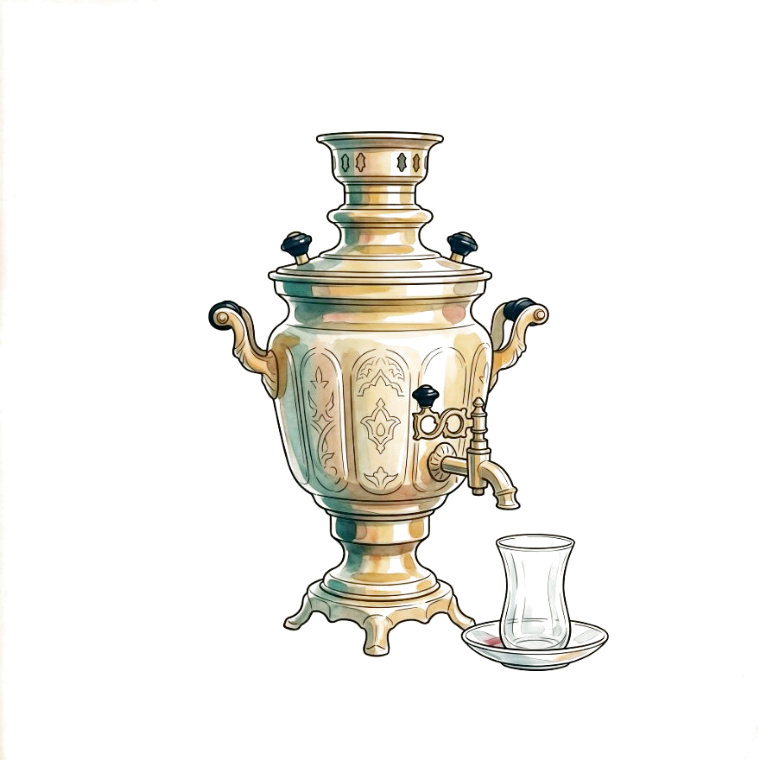
فنجون. fenjun. cup. Specifically, the small glass cup. استکان. estekân. a waisted tea glass. Not a mug. If someone hands you tea in an estekân, they're hosting properly.
For the full tea-and-tarof conversation in dialogue form, the <a href="/farsi-scenes/iranian-tarof-tea-phrases-farsi/">tea scene episode</a> walks through every line. The tea is almost always black. چایی سیاه. châyi-ye siyâh. It'll be strong. It'll be hot. Hold the estekân by the rim. the glass is thin and the bottom is burning.
The Fruit and Sweet Offering
After tea comes the fruit plate. This is automatic. Even if you arrived unannounced, even if the host was in pajamas five minutes ago, a fruit plate will materialize.
میوه بخور. mive bokhor. "eat fruit." The host places a plate of cut fruit in front of you. You refuse.
زحمت نکش. zahmat nakesh. "don't trouble yourself." You say this.
خودت رو اذیت نکن. khodet-o aziyat nakon. "don't put yourself through trouble." A variation.
The host says: تعارف نکن. ta'ârof nakon. "don't do tarof." Which is itself tarof. Take a piece of fruit.
Then come the extras:
آجیل. âjil. mixed nuts. Pistachios, almonds, walnuts, sometimes dried mulberries. If the host brings out a full spread of âjil with multiple bowls, they're signaling this is a proper hosting occasion.
شیرینی. shirini. pastries. Could be store-bought, could be homemade. Either way, eat at least one piece. Refusing all food is more offensive than eating with your mouth full.
What's offered tells you something. Pistachios = the host is going all out. A bag of pofak (chickpea puffs) = casual visit. Both are fine. The effort behind the offering is the message.
What Iranians Actually Ask About
Iranian small talk follows a predictable pattern. Five topics, in roughly this order:
خانوادهت خوبن؟. khânevâdet khuban?. "is your family well?" Always the first question. The answer is always ممنون خوبن سلام میرسونن. mamnun khuban, salâm miresunand. "thanks, they're well, they send regards." Even if they didn't actually send regards.
کار چطوره؟. kâr chetore?. "how's work?" Acceptable answers range from خدا رو شکر خوبه. khodâ ro shokr khube. "thanks to God, it's good". to a 20-minute detailed account of your professional situation. Both are normal.
بچهها چطورن؟. bache-hâ chetoran?. "how are the kids?" If you have them. If you don't, they'll ask when you're planning to. This is not considered intrusive in Iranian culture.
سلامتی چطوره؟. salâmati chetore?. "how's your health?" Asked especially of older guests. A genuine inquiry, not just small talk.
خبری هست؟. khabari hast?. "any news?" The catch-all. This can mean "is anything happening in your life?" or "tell me something I don't know."
What the Host Is Really Doing
Behind the tea and the fruit and the small talk, the host is reading you. This isn't cynical. it's the Iranian social instinct. They're evaluating several things at once:
Your tarof fluency. Did you refuse tea the right number of times? Did you compliment the home? Did you accept food gracefully?
Your body language. Are you relaxed or rigid? Are you leaning in when spoken to? Are you making eye contact with the elders?
Your compliments. The winning move: خونهتون خیلی قشنگه. khunetun kheili ghashange. "your home is beautiful." Say it once. Mean it.
Another strong phrase: چشمات روشن. cheshmât roshan. "may your eyes be bright." A compliment you say TO someone when they've received good news or when you're visiting after a long time. It means: seeing you is a joy.
And: لطف دارید. lotf dârid. "you're kind." Said after ANY compliment directed at you. Iranian modesty protocol.
For the cognitive science behind why tarof works this way. and why it's not just "being polite". read the tarof science post. And for the specific mechanics of refusing and accepting, the mersi hack covers the technique.
The Reciprocal Obligation
As you're leaving, the host says:
ایشالا شما هم بیاید. ishâlâ shomâ ham biyâid. "God willing, you'll come to ours too." Wait. you're already at their house. What they mean is: next time you should host us.
Every visit creates a social debt. If someone hosts you, you owe a return visit. This isn't transactional. it's the fabric of Iranian social life. The cycle of visiting, hosting, bringing food, returning containers, visiting again. this IS the relationship.
قدمت روی چشمم. ghadamet ru-ye cheshmam. "your step is on my eye." Meaning: you're welcome anytime. The most generous invitation phrase in Farsi.
خونه خودتونه. khune khodetune. "this is your own home." Said by the host to make you feel at ease. It means: stop being a guest and start being family.
For the full dining phrase vocabulary. what to say at the sofreh. that post covers the table side. And for how the sofreh is physically set up, there's a post for that too.
Reading the Room: When to Leave
The hardest skill: knowing when the host wants you to go while they're insisting you stay. Watch for:
The tea refills slow down. If the host stops offering, the visit is winding down.
The energy shifts. Conversation becomes shorter. The host mentions their own schedule. فردا صبح زود کار دارم. fardâ sobh zud kâr dâram. "I have work early tomorrow". but frames it casually.
The tarof insistence gets shorter. If "bemon bemon" sounds like two syllables instead of an urgent plea, it's real time to go.
Start your exit: دیگه مزاحم نمیشیم. dige mozâhem nemishim. "we won't trouble you anymore." This is the respectful departure phrase, acknowledging you've taken their time.
The Practice Problem
The hardest part of Iranian house visits isn't the language. it's the timing. Knowing when to say بسه ممنون. base mamnun. "that's enough, thanks" versus ممنون لطف دارید. mamnun lotf dârid. "thanks, you're kind" is the difference between awkward and fluent. Our app, ZabanYar, is coming soon.
This post is part of the mehmooni guide. the full map of Iranian social events.
If you want live pronunciation practice for these phrases with a native speaker, book a trial lesson on Preply.
FAQ
What happens during a typical Iranian house visit?
How many times should you refuse food at an Iranian home?
What does cheshmât roshan mean in Farsi?
What is the ghand-pahlou technique for Iranian tea?
How do you compliment an Iranian host's home?
Get it wrong and the worst that happens is a warm laugh and a story they’ll tell for years. Get it right — refuse the tea twice, accept on the third — and you’ll watch a face open up. You didn’t just speak Persian. You played the game.
A teacher from Tabriz, based in Milano. 5.0 on Preply across 52 reviews, 1,652 lessons taught. He curates the growing dictionary behind this site.
 Learn PersianPractice Persian Grammar by Mixing Tenses: 4 Simple MethodsSept 2026
 Learn PersianJoonam, Jigaram, Azizam: Persian Terms of EndearmentJun 2026Learn PersianHaggling in Farsi: How to Bargain at the BazaarJun 2026Learn PersianThe 50 Farsi Phrases That'll Make Your Partner's Mom Love YouMay 2026
 Learn PersianAI Tools for Learning Farsi: What Actually Works in 2026Jul 2026
 Learn PersianHow to Learn to Read Persian When You Already Speak ItAug 2026