

Ordering Food in Iran: A Language Guide
Ordering food in Farsi goes way beyond pointing at a menu. From kababi shops with no written menu to tarof battles at someone's dinner table, here's the language you actually need to eat well in Iran.
Food in Iran Runs on Conversation, Not Menus
Last summer, my cousin from Canada sat down at a traditional restaurant in Tehran's Darband neighborhood and immediately asked for a menu. The waiter smiled politely and said menoo nadaarim (منو نداریم). we don't have a menu. My cousin looked at me like someone had just stolen his wallet.
This guide is part of our Essential Farsi for Traveling in Iran series.
This is how ordering food in Farsi actually works. Half the restaurants in Iran don't have printed menus. Street food vendors definitely don't. And even when there IS a menu, the real ordering happens through conversation. asking what's fresh, what's good today, what the chef recommends. If you can't speak enough Persian to have that exchange, you're going to end up eating the same three dishes for your entire trip.
I grew up with this system, and it still trips me up sometimes when I go back. The language of food in Iran is its own dialect. part vocabulary, part social ritual, part performance. Here's what you need to know before your first meal.
The Phrases That Actually Matter
Forget the phrasebook lists with fifty food words you'll never use. These are the sentences that get you fed:
Chikar daarin? (چیکار دارین؟). What do you have? This is your opening move at any place without a menu. You're asking the waiter or vendor to tell you what's available today. Not what's on the permanent menu. What they actually made this morning.
Yeki az in, lotfan (یکی از این، لطفاً). One of these, please. Point and say this. Works everywhere. Street food stalls, bakeries, places where you can see the food but can't read the sign. Nobody will judge you for pointing.
In chie? (این چیه؟). What's this? Essential when you're looking at a display of stews and rice dishes and have no idea what anything is. Iranians love explaining their food to foreigners. Ask this and you'll get a five-minute lecture on ingredients.
Hessab, lotfan (حساب، لطفاً). Check, please. In most traditional restaurants, you don't get the bill automatically. You have to ask. Some places, you pay at the register on your way out instead.
Dastetoon dard nakone (دستتون درد نکنه). literally "may your hand not hurt." This is what you say to thank the cook or the person who served you. It's more personal than a generic mersi (مرسی) and Iranians notice when a foreigner uses it.
How Restaurants Actually Work
Iranian restaurants split into two categories that operate completely differently.
Traditional restaurants. the ones with carpet-covered platforms called takht (تخت), where you sit on the floor. tend to have limited, rotating menus. The waiter will often just list what's available: emrooz ghormeh sabzi daarim, gheimeh daarim, koobideh daarim (today we have ghormeh sabzi, gheimeh, koobideh). You pick from what they tell you. The rice comes automatically. you don't order it separately.
Modern restaurants in Tehran and other big cities work more like Western ones. Printed menus, sometimes with photos. Prices listed. But even here, you should ask pishnahaadetoon chie? (پیشنهادتون چیه؟). what do you recommend?. because the printed menu and the actual kitchen reality can be different things. If the waiter hesitates on a dish, don't order it.
The Kababi Shop: Iran's Fast Food
Kababi shops. kababi (کبابی). are everywhere. They're Iran's version of fast food, except the food is actually good. The ordering system is streamlined because the menu is short: different types of kebab, rice, bread, and maybe a few sides.
Here's the vocabulary that matters:
- Koobideh (کوبیده). ground meat kebab, the default order. If you just say "kebab" in Iran, this is what you'll get.
- Barg (برگ). filet kebab, more expensive, worth it.
- Jujeh kabab (جوجه کباب). chicken kebab, marinated in saffron and lemon.
- Soltani (سلطانی). one koobideh plus one barg. The "sultan's combo." Most bang for your toman.
- Chelo (چلو). plain white rice. Comes with a pat of butter and sometimes raw egg yolk.
To order: do sikh koobideh ba chelo, lotfan (دو سیخ کوبیده با چلو لطفاً). two skewers of koobideh with rice, please. Sikh (سیخ) means skewer, and it's how you count kebabs. One sikh, two sikh. The number matters because one skewer is often not enough for a full meal.
Bread comes in different types: sangak (سنگک) is the big flatbread baked on hot stones, lavash (لواش) is the thin one, barbari (بربری) is the thick sesame-topped one. At a kababi, they'll usually just bring whatever they have unless you specify.
Street Food and Tea Houses
Street food in Iran means standing at a cart or a tiny shopfront and ordering through a window. No menus. No seating. Just point-and-eat efficiency.
The key phrase here is chand-e? (چنده؟). how much? Because prices aren't always posted. You'll use this constantly at ash (آش) stands selling thick noodle soup, falafel shops in the south, and labu (لبو) carts selling hot beetroot in winter.
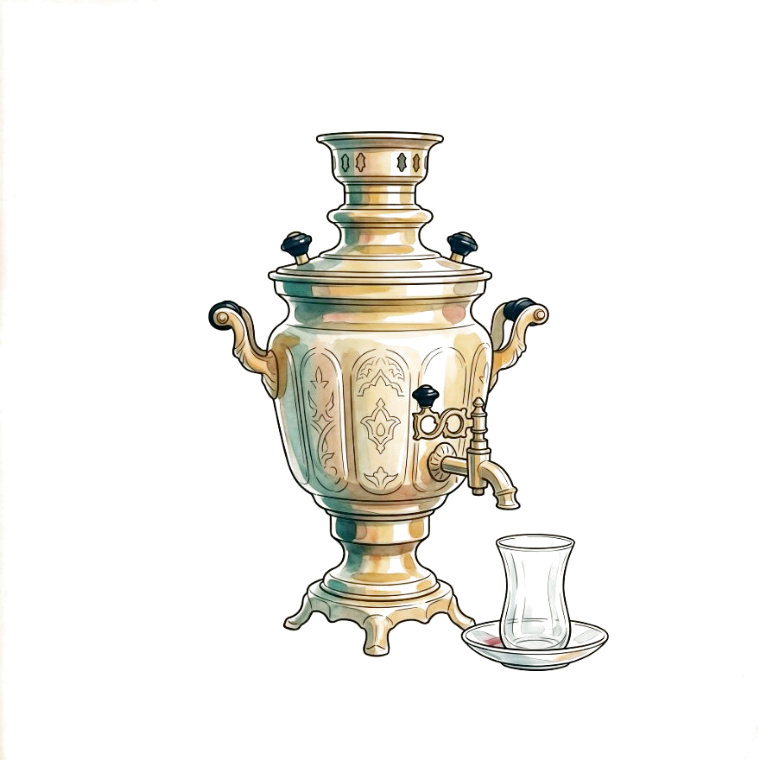
Tea houses. chaaikhoone (چایخونه). are a different beast. You go for tea and end up staying three hours. The waiter brings tea automatically. If you want food, ask ghaza ham daarin? (غذا هم دارین؟). do you have food too? Some tea houses serve full meals, some only serve ghalyan (قلیان). hookah. with tea and sweets. The tea itself is always chaai (چای) served in small glass cups called estekan (استکان). Sugar comes as cubes. ghand (قند). that you hold between your teeth and sip through. This isn't a tourist performance. People actually drink tea this way.
Eating at Someone's Home (The Tarof Minefield)
If an Iranian invites you over for food, congratulations. you're about to experience the best meal of your trip and the most confusing social interaction of your life. This is where tarof. Iran's elaborate politeness system. goes into overdrive.
The host will insist you eat more. Befarmaiin, bishtar bekhorid (بفرمایین بیشتر بخورید). please, eat more. They'll pile food on your plate when you're not looking. They'll say ghaza nakhordin ke! (غذا نخوردین که!). you haven't eaten anything!. when you've had three servings.
Your job is to resist politely at first, then give in. Say mersi, sir shodam (مرسی، سیر شدم). thanks, I'm full. and they'll ignore you. Say it again, they'll still ignore you. On the third refusal, they might actually believe you. Maybe. The whole thing is a dance, and both sides know it's a dance, and that's the point. For a deeper breakdown of how tarof works, check out the guide to saying no in Farsi.
One phrase that helps: daste shoma dard nakone, kheili khoshmazze bood (دست شما درد نکنه، خیلی خوشمزه بود). your hand doesn't hurt, it was delicious. This is the gold-standard compliment after a home-cooked meal. Better than any generic "thank you."
Dietary Restrictions in Farsi
Iran isn't great with dietary restrictions, but the language exists if you need it. The key structure is man [food] nemikhoram (من [غذا] نمیخورم). I don't eat [food].
- Man goosht nemikhoram (من گوشت نمیخورم). I don't eat meat.
- Man goosht-e khook nemikhoram (من گوشت خوک نمیخورم). I don't eat pork. (Not an issue in Iran, pork isn't served anywhere, but useful to know the word.)
- Hasaasiyat daaram (حساسیت دارم). I have an allergy. Follow with be [food]. to [food]. Hasaasiyat daaram be baadaam zemini = I'm allergic to peanuts.
- Ghaza-ye giahi daarin? (غذای گیاهی دارین؟). Do you have vegetarian food?
Fair warning: vegetarianism confuses many Iranians, especially outside Tehran. Food culture here revolves around meat. A waiter might hear "I don't eat meat" and serve you a stew that was cooked with meat broth because technically the chunks were removed. Be specific. Say hich gooshti, hatta aab-goosht ham na (هیچ گوشتی، حتی آبگوشت هم نه). no meat at all, not even broth.
Tipping and Paying
Tipping in Iran isn't like the US, where you calculate percentages and feel guilty. It's simpler. Round up the bill or leave 10-15% at nicer restaurants. At a kababi or street food place, tipping isn't expected but small change is appreciated.
The word for tip is enaam (انعام). You won't need to say it. just leave the money on the table or hand it directly to the waiter. Some restaurants add a service charge. hazine-ye servis (هزینه سرویس). to the bill. Check before you double-tip.
Cash is king. Iran's banking system is disconnected from international networks, so your Visa card is useless. You'll pay with rials, and the pricing situation is its own adventure. Iranians often quote prices in toman (تومان), which is one-tenth of the rial amount. So when someone says panjah toman (پنجاه تومان), they mean 500,000 rials. Yes, it's confusing. Check out the Farsi travel guide for more on handling money and numbers.
The Rice and Stew Vocabulary
Rice. berenj (برنج). is the center of Iranian cuisine. It's not a side dish. It's the main event, and everything else is built around it.
Key rice dishes:
- Chelo (چلو). plain steamed rice, served with kebab or stew.
- Polo (پلو). rice cooked with other ingredients mixed in. Zereshk polo (زرشک پلو) = barberry rice. Baghali polo (باقالی پلو) = dill and fava bean rice.
- Tahdig (ته دیگ). the crispy golden crust at the bottom of the rice pot. This is the best part. Everyone fights over it. If the host gives you tahdig, you're honored.
Stews. khoresh (خورش) or khoresht (خورشت). are poured over the rice:
- Ghormeh sabzi (قورمه سبزی). herb stew with kidney beans and dried lime. Iran's national dish, essentially.
- Gheimeh (قیمه). split pea and meat stew with dried lime and fried potatoes on top.
- Fesenjan (فسنجان). walnut and pomegranate stew, usually with chicken. Sweet and sour. Polarizing. people either love it or find it too heavy.
When you're at a restaurant, the stews and rice pairings are usually pre-set. You order the stew, the rice comes with it. No customization needed. Just say ye pors ghormeh sabzi, lotfan (یه پرس قورمه سبزی لطفاً). one serving of ghormeh sabzi, please. Pors (پرس) means serving/portion.
If you're serious about learning spoken Farsi versus the textbook version, food vocabulary is where the gap shows up fast. The way real people order. dropping words, shortening phrases, using slang. sounds nothing like the formal sentences in a Persian course. And if you want to build a real foundation before your trip, start with the beginner's guide to learning Persian.
For the full restaurant experience in Farsi. from reading the menu to fighting over the bill. check out One Scene a Week, Episode 6. And if you want to learn the dishes themselves, the Cook Your Way to Farsi series teaches you Persian food vocabulary through 18 real recipes.
Keep Learning
This guide is part of: Essential Farsi for Traveling in Iran
Read next: Haggling at the Bazaar · Hotels & Guesthouses
New to Farsi? Start with the complete beginner's guide.
How do I ask for the bill in Farsi at a restaurant?
Can I find vegetarian food easily in Iran?
Do Iranian restaurants accept credit cards from abroad?
What's the difference between toman and rial when paying for food?
Is it rude to refuse food at an Iranian's home?
Want to practice this vocabulary? Our app, ZabanYar, is coming soon.
Eating well in Iran is one of the best things you can do there. But eating well means being able to talk about food. ordering it, asking about it, complimenting it. Even a handful of these phrases will change how people treat you at the table. And if you want to go deeper. like actually hold a conversation with the guy grilling your koobideh. I teach conversational Tehrani Persian on Preply, and food is always one of the first topics we cover.
Get it wrong and the worst that happens is a warm laugh and a story they’ll tell for years. Get it right — refuse the tea twice, accept on the third — and you’ll watch a face open up. You didn’t just speak Persian. You played the game.
A teacher from Tabriz, based in Milano. 5.0 on Preply across 52 reviews, 1,652 lessons taught. He curates the growing dictionary behind this site.
 Learn PersianArriving and Leaving an Iranian Home: The 30-Minute GoodbyeJul 2026
 Learn Persian7 Concepts Farsi Doesn't Have Words ForMay 2026
 Learn PersianThe 50 Farsi Phrases That'll Make Your Partner's Mom Love YouMay 2026
 Learn PersianFarsi for Iranian Weddings and EngagementsJun 2026Learn PersianHow Persian Grammar Shapes PerceptionJun 2026
 Learn PersianDating an Iranian: What Nobody Tells You About Love in FarsiJul 2026