

Iranian Meeting Etiquette: What Foreigners Get Wrong
Iranian meeting etiquette explained: hierarchy, small talk, tea rituals, and the unwritten rules foreigners always get wrong.
Iranian meeting etiquette follows rules that nobody writes down but everyone understands. If you walk in with a Western playbook. agenda first, time is money, let's be efficient. you'll confuse people at best and offend them at worst. These are the things foreigners consistently get wrong about Iranian meeting culture, and what you should do instead. (For a broader look at Iranian social norms beyond the boardroom, see our guide to Iranian social customs, humor, and internet culture.)
Hierarchy Runs Everything
In an Iranian business meeting, the most senior person speaks first. Not the person with the best idea, not the meeting organizer, not the person closest to the project. The مدیر. modir. manager. or whoever holds the highest rank in the room sets the tone.
This means: don't jump in with your presentation before the boss has spoken. Don't interrupt a superior, even to agree with them. And definitely don't contradict someone who outranks you in front of others. there's a way to handle disagreement, and public contradiction isn't it.
Watch the room. The junior employees will usually wait to be addressed. The middle managers will speak when the senior person pauses. There's an unspoken order, and if you pay attention for the first ten minutes, you'll see it clearly.
The phrase you'll hear is بفرمایید. befarmâyid. a polite "please go ahead." When the senior person says this to you, that's your cue. Not before.
Small Talk Isn't Small. It's Mandatory
The first five to ten minutes of any Iranian business meeting will be personal conversation. This isn't wasted time. This is آشنایی. âshenâyi. getting acquainted. Skipping it signals that you don't care about the relationship, only the transaction.
Common topics: family, health, travel, food. The weather is fine but boring. Complimenting Iran or Iranian culture works well. Iranians are genuinely proud of their heritage, and a sincere comment about the food, the architecture, or the hospitality goes far.
What to avoid: politics, religion, anything about sanctions unless they bring it up first. And don't fake enthusiasm. Iranians have a sharp radar for insincerity. probably sharpened by centuries of تعارف. ta'ârof. the complex Persian politeness system.
Speaking of which, if you want to understand ta'arof beyond the surface level, I wrote a detailed breakdown in how to say no in Farsi. It's relevant here because ta'arof shows up constantly in business settings.
"Yes" Doesn't Always Mean Yes
This is where ta'arof gets dangerous in business. When your Iranian counterpart says حتماً. hatman. "certainly". or انشاالله. enshâ'allâh. "God willing," they might mean it. Or they might be being polite. Or they might be kicking the decision down the road without saying no.
Here's how to tell the difference:
A firm yes usually comes with specifics: a date, a number, an action item. "We'll send the contract by Thursday" is probably real. "We'll definitely look into it, enshâ'allâh" is soft. it means "probably not, but I'm too polite to say that right now."
The word ببینیم. bebinim. "let's see". is almost always a gentle no. If you hear it, don't push. Pushing makes them uncomfortable, and uncomfortable people don't do deals with you.
The best strategy: after a meeting, send a follow-up message summarizing what was agreed. If they correct something or stay silent on a point, you'll know where things actually stand.
Phones Are Not Rude (Here)
In most Western business cultures, checking your phone during a meeting is disrespectful. In Iran, it's normal. Your Iranian counterparts will take calls, check messages, even have side conversations on Telegram while the meeting is happening.
Don't read this as disinterest. Iranian business culture is more fluid than the compartmentalized Western style. People manage multiple things at once. The meeting isn't a sealed environment. it's one thread in a busy day.
That said, put your own phone on silent as a foreigner. The rules that apply to locals don't automatically apply to you. Being extra-polite is always the safer bet.
Tea Will Be Served. Accept It.
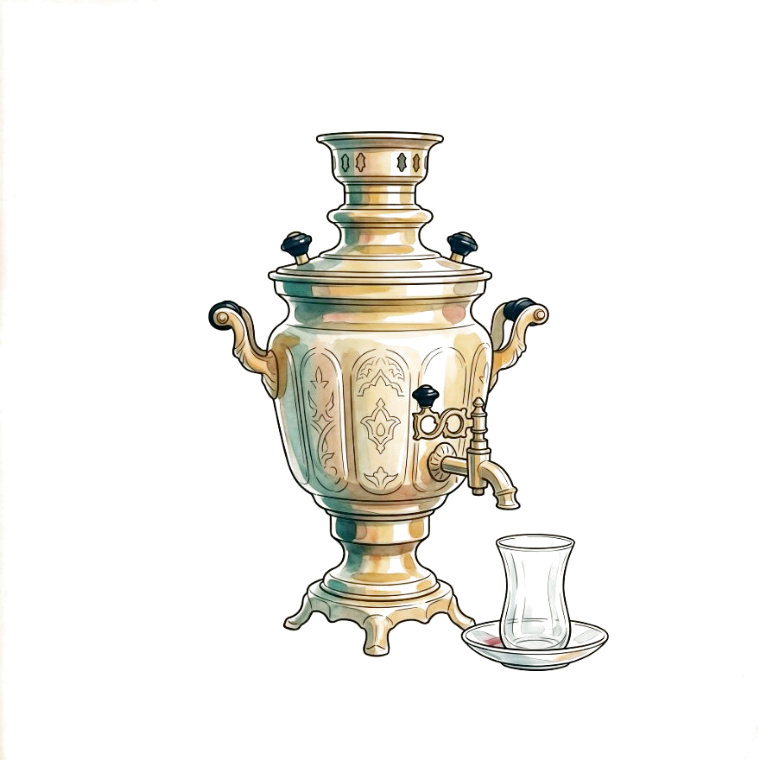
Within the first few minutes of any meeting, someone will bring چای. châi. tea. This isn't optional. Declining tea in an Iranian business setting is like declining a handshake. technically possible, but it sends a strange signal.
The tea will be black, usually served in small glasses called استکان. estekân. Sugar cubes on the side. you're meant to hold one between your teeth and sip through it, though nobody will judge you for stirring it in.
Sometimes you'll get a second round. Sometimes a third. Each round is another few minutes of conversation, another layer of comfort built between you and your hosts. The tea ritual is the rhythm of the meeting. it creates natural pauses and transitions.
If fruit or sweets appear, accept those too. Hospitality in Iran is serious business, and refusing it can feel like a rejection of the relationship itself.
How to Disagree With a Superior
Directly contradicting a boss in an Iranian meeting is a career-limiting move. But disagreement happens. it just happens differently.
The technique is indirect: frame your disagreement as a question, not a statement. Instead of "I think that's wrong," try ببخشید، شاید بشه از یه زاویه دیگه هم نگاه کرد؟. Bebakhshid, shâyad beshe az ye zâviye-ye dige ham negâh kard?. "Excuse me, maybe we could look at it from another angle?"
Another approach: bring in outside authority. "I read that..." or "In our previous experience..." shifts the source of disagreement away from you personally and onto an external reference.
The key principle is حفظ آبرو. hefz-e âberu. saving face. In Iranian culture, making someone lose face publicly. especially someone senior. damages the relationship in ways that are hard to repair. You can be direct in private. In public, be diplomatic.
I wrote more about this specific skill in my post on how to disagree politely in Farsi. The phrases there work in both social and professional contexts.
The Follow-Up Culture
Iranian business doesn't end when the meeting ends. The real work often happens in the follow-up. the phone calls after, the messages, the informal check-ins.
Expect a slower pace than you're used to. Decisions that would take one email chain in a Western company might take three meetings and a week of پیگیری. peygiri. follow-up. in Iran. This isn't inefficiency. It's thoroughness mixed with consensus-building mixed with the reality that senior approvals take time.
Your job after a meeting: send a polite summary message (WhatsApp or Telegram, not just email. Iranians live on messaging apps). Thank them for the meeting. Restate key points. And then wait. Don't send four follow-ups in two days. Patience signals that you're serious, not desperate.
The phrase منتظر نتیجه هستم. montazer-e natije hastam. "I'm waiting for the result". is your polite way of saying "ball's in your court." Use it once. Then wait.
What to Wear, How to Arrive
Business dress in Iran is formal. For men: suit and tie or at minimum dress pants and a collared shirt. Jeans are a no. For women: a conservative مانتو. mânto. overcoat. with a headscarf, or formal Western business attire with a scarf depending on the company culture.
Arrive on time, but don't be surprised if the Iranians are late. Iranian time. وقت ایرانی. vaght-e irâni. is a real phenomenon. A 10am meeting might start at 10:20. This isn't disrespect toward you; it's just how time works in Iranian professional culture. Adjust your expectations without adjusting your own punctuality.
Bring business cards. Present them with both hands or with the right hand. left hand alone is considered less polite. If your card has Farsi on one side, present that side up. It shows effort and respect.
The Relationship Always Comes First
The single biggest mistake foreigners make in Iranian business meetings is treating the meeting as purely transactional. In Iran, the relationship IS the business. People do deals with people they trust, and trust is built through repeated personal interaction, not through a strong PowerPoint.
This is why that first "wasted" hour of tea and small talk matters. It's why follow-up messages matter. It's why remembering someone's kid's name matters. Iranian business is built on اعتماد. e'temâd. trust. and trust is earned slowly.
If your counterpart invites you to dinner, go. If they ask personal questions, answer warmly. If they seem to be taking forever to get to the point, they're getting to the point. just not the way you expect.
For a broader look at how these dynamics play out in professional Persian contexts, check out the full Business Farsi guide.
FAQ
Should I speak Farsi in an Iranian business meeting or use English?
Is it okay to shake hands with the opposite gender in Iranian business?
How long should I wait before following up after a business meeting in Iran?
Do Iranian businesses use formal written Persian or colloquial Farsi?
What's the biggest cultural mistake foreigners make in Iranian meetings?
Our app, ZabanYar, is coming soon.
If you'd rather practice Iranian business scenarios with a native speaker, I'm available on Preply. We can run mock meetings, practice the etiquette, and work through real-world situations.
Get it wrong and the worst that happens is a warm laugh and a story they’ll tell for years. Get it right — refuse the tea twice, accept on the third — and you’ll watch a face open up. You didn’t just speak Persian. You played the game.
A teacher from Tabriz, based in Milano. 5.0 on Preply across 52 reviews, 1,652 lessons taught. He curates the growing dictionary behind this site.
 Persian Culture & TraditionsPersian Jokes Explained: Why Iranians Laugh at ThemselvesApr 2026
 Persian Culture & TraditionsIranian Social Dynamics: 4 Things Foreigners Always MissSept 2026
 Persian Culture & TraditionsMeeting Your Iranian Partner's Parents: A Farsi Survival GuideJun 2026
 Persian Culture & TraditionsSuperstitions, Cheshm-Nazar, and the Evil Eye in PersianAug 2026
 Persian Culture & TraditionsStop Saying 'I' in Farsi: 4 Pronouns Iranians Use InsteadNov 2025
 Persian Culture & TraditionsHow Old Is Persian? 2,500 Years From Cuneiform to FarsiMay 2026