

Farsi Classes in Paris: INALCO and 5 Iranian Options (2026)
Farsi classes in Paris reviewed: INALCO, cultural centres, and private tutors compared. How France's Persian academic tradition and Iranian film culture shape learning here.
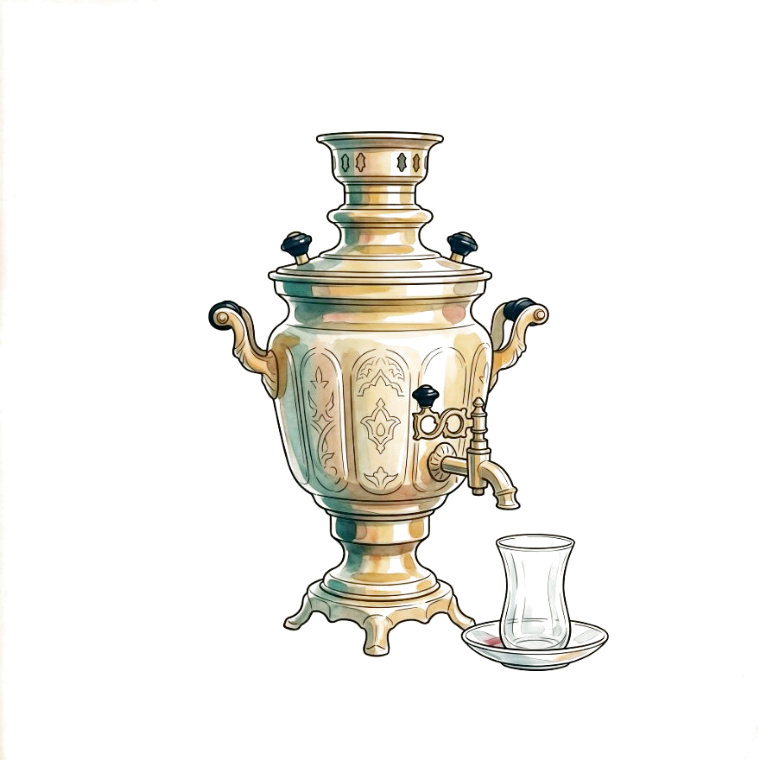
Persian and French have been trading words for over a century. «مرسی» (mersi). the most common way Iranians say thank you. is French. «ماشین» (māshin, car) comes from the French machine. Cabinet, buffet, asphalt, bouquet. everyday Persian is full of French loanwords, remnants of an era when France was Iran’s primary intellectual partner. This linguistic connection is part of what makes farsi classes in Paris a genuinely different proposition than in most other cities.
Paris has INALCO, one of Europe’s finest institutions for Oriental languages. It has an Iranian intellectual diaspora that shaped exile culture for four decades. And it has a learning scene that reflects this particular tradition: literary, cultural, intellectual, and almost entirely focused on the wrong register for conversation.
INALCO: France’s Elite Persian Programme
The Institut National des Langues et Civilisations Orientales. INALCO. has been teaching Asian, African, and Middle Eastern languages for over two centuries. Its Persian department is not an afterthought or an elective offering. It is a serious academic programme with faculty who publish in the field, a curriculum that progresses from beginner through advanced literary analysis, and a reputation that makes an INALCO Persian qualification genuinely respected in academic and diplomatic circles.
For learners drawn to Persian through literature, history, or intellectual curiosity, and Paris produces more of these than most cities. INALCO is a legitimate investment. You will learn to read Hafez and Ferdowsi. You will understand the formal language of Iranian politics and journalism. You will develop a reading proficiency that opens classical and modern Persian texts in the original. For what it is designed to do, INALCO does it very well.
The register is ketabi. formal written Persian. This is the consistent limitation of every academic programme in this guide. The formal written register and the spoken Tehran dialect (mahavere) are structurally different enough that mastering one does not give you the other. An INALCO graduate who walks into a gathering of Iranians in the 15th arrondissement will read the poetry on the wall but may struggle with the conversation around the table. The full explanation of this divide is worth reading.
The French-Iranian Intellectual Scene
What makes Paris genuinely unique for Persian learning. beyond INALCO. is the character of its Iranian diaspora. This is not primarily a merchant community (like Dubai) or a heritage family community (like Vancouver). Paris’s Iranian community has been defined since 1979 by its intellectual and artistic identity.
The post-revolution Iranian exile culture in Paris was literary, political, and philosophical. Writers, filmmakers, political dissidents, academics. people who left Tehran and chose Paris specifically because of France’s intellectual tradition and its historical ties to Iran. Saint-Germain-des-Prés became associated with Iranian intellectual exile. Iranian bookshops and publishing houses established themselves on the Left Bank. The community that formed was, and remains, unusually literary.
This shapes the language environment for learners. Paris’s Iranian cultural events tend toward the intellectual: film screenings with discussion, literary readings, political lectures, art exhibitions with Persian-language programming. The conversations you overhear in Iranian circles in Paris are more likely to reference Sadegh Hedayat or Bahram Beyzaie than the latest Instagram trend from Tehran. The cultural register is high, and the language reflects it.
For learners who came to Persian through Iranian cinema. Kiarostami, Farhadi, Panahi. Paris has a particular appeal. France has the strongest tradition of Iranian film distribution and criticism outside Iran itself. The Cannes connection is real. Iranian films screen regularly in Parisian cinemas, and the community that discusses them is active and engaged. But here is the catch: Iranian films are in spoken mahavere. The dialogue in A Separation or Close-Up is colloquial, fast, full of register markers that formal instruction does not prepare you for. Loving Iranian cinema and understanding it without subtitles are two different things, and the gap between them is the register gap.
Paris’s Iranian Neighbourhoods
The Iranian community in France numbers over 100,000, with Paris holding the largest concentration. The community does not cluster as visibly as in LA or London, but Iranian cultural spaces, restaurants, and grocery stores are concentrated in several areas: parts of the 15th and 16th arrondissements, the northern suburbs (Seine-Saint-Denis), and scattered through the inner city. Iranian cultural associations, bookshops, and community organisations are findable but not always prominent.
The community has the particular character of a mature intellectual diaspora: politically conscious, culturally active, maintained through cultural events and social networks rather than geographic concentration. For a language learner, immersion requires seeking out these spaces deliberately rather than encountering them by accident.
Other Options in Paris
Iranian cultural associations. Paris has several, running language sessions alongside film screenings, exhibitions, and cultural events. The Maison de l’Iran and various community groups offer intermittent programming. Quality and structure vary. Worth investigating for cultural immersion alongside language study, but not substitutes for structured instruction.
Private tutors. Paris’s established Iranian diaspora means the tutor pool is solid. Tutors are available through platforms and community networks. The usual filter applies: ask whether they teach the conversational register or default to formal instruction. Paris tutors from the intellectual diaspora may lean toward literary Persian, which is excellent for reading but not the same as spoken fluency.
For one-on-one mahavere instruction. the spoken register that films, conversations, and daily Iranian life actually use. I teach on Preply. The time zone overlap with Iran from Paris is ideal for scheduling.
And for the full picture on getting started with Persian, the beginner’s guide covers what to expect. Our app, ZabanYar, is coming soon.
What Works for Learners in Paris
If you are drawn to Persian through film and culture: INALCO for the foundation (reading, grammar, cultural context), then mahavere tutoring for the spoken register that films actually use. You will need both to watch Iranian cinema without subtitles. formal study for comprehension of cultural references, spoken practice for the dialogue itself.
If you are learning for a relationship or social reasons: A tutor who teaches spoken register. The Iranian dinner table in Paris speaks mahavere, same as everywhere. The literary sophistication of the community does not change the register of family conversation.
If you want to engage with Persian literature in the original: INALCO is the right investment. Pair it with online resources for supplementary reading material and listening practice.
Frequently Asked Questions
How much do Farsi classes cost in Paris?
Can I study Persian at INALCO without a degree programme?
Where is the Iranian community in Paris?
Does knowing French help with learning Farsi?
Can I learn to understand Iranian films in Persian?
Paris and Persian have a longer, deeper connection than most cities. The French-Iranian intellectual tradition, the cinema culture, the literary diaspora. all of this creates a uniquely rich context for learning the language. The instruction available matches some of this richness (INALCO is genuinely excellent) but misses the register that actually animates Iranian cultural life: the spoken, the cinematic, the conversational. Bridging that gap. from the academic to the living. is the project that makes learning Persian in Paris rewarding rather than frustrating.
Get it wrong and the worst that happens is a warm laugh and a story they’ll tell for years. Get it right — refuse the tea twice, accept on the third — and you’ll watch a face open up. You didn’t just speak Persian. You played the game.
A teacher from Tabriz, based in Milano. 5.0 on Preply across 52 reviews, 1,652 lessons taught. He curates the growing dictionary behind this site.
 Learn PersianFarsi Classes in Berlin: Learning Persian in Iran's Newest DiasporaJul 2026Learn PersianFarsi Classes in Sydney: HSC Persian for ATAR CreditSept 2026
 Learn PersianFarsi Classes in Los Angeles: The Tehrangeles ParadoxJun 2026Learn PersianFarsi Classes in New York: Diplomatic Persian, Great Neck, and the Professional GapMay 2026Learn PersianFarsi Classes in Toronto: Tehranto's Three Schools ComparedNov 2025
 Learn PersianFarsi Classes in Victoria: The Island Learner's GuideJun 2026