Persian Tea Vocabulary: Iran's Most Important Ritual
25+ essential Persian tea words covering equipment, brewing, sugar types, and social phrases. Learn the vocabulary behind Iran's most important daily ritual.
In Italy, you don't mess with someone's espresso. You don't ask for milk after 11 a.m. You don't order a cappuccino with dinner. Coffee here isn't a drink. it's a belief system. But I grew up with a different kind of caffeinated religion, and if you want to understand Iranian culture, you need to learn the persian tea vocabulary that powers it. Because in Iran, tea isn't a beverage. It's a social operating system. Every meeting starts with it. Every argument pauses for it. Every guest gets offered it. and refusing takes three rounds of taarof before anyone believes you.
I've watched my Italian friends treat their espresso with the same reverence my family treats their چای. châi. tea. The difference? An espresso takes 30 seconds. Iranian tea is a production. There's a whole vocabulary for the color, the strength, the equipment, the sugar situation, and the dozen social rituals built around a single glass. Here are the 25+ words you actually need.
The Equipment: Your Persian Tea Starter Kit
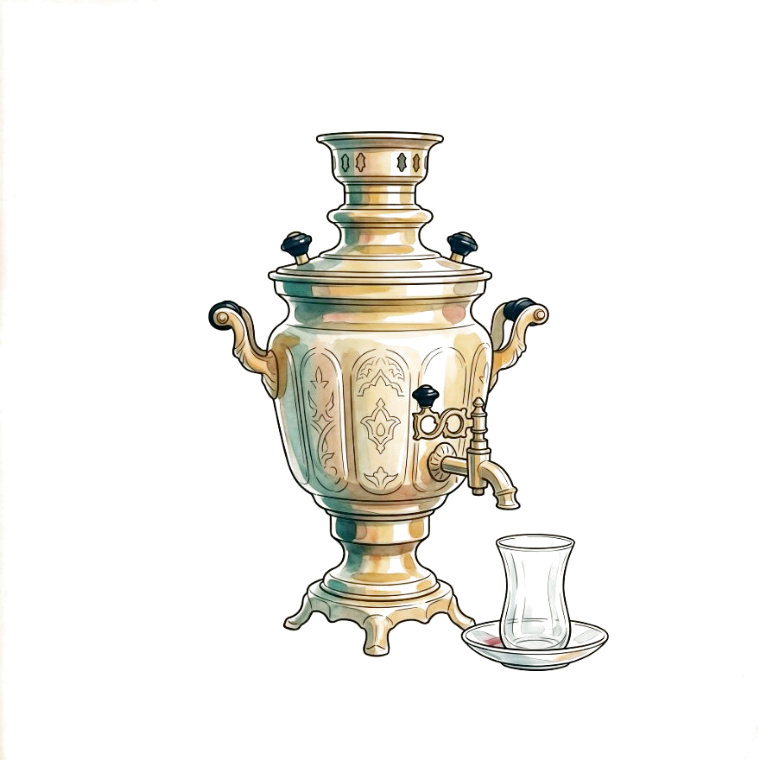
Walk into any Iranian home and you'll find these. My grandmother's سماور. samovâr. samovar ran all day, every day. It wasn't decorative. It was infrastructure.
سماور. samovâr. samovar (the big water heater that sits on the counter like a small monument)
قوری. ghuri. teapot (sits on top of the samovar, brewing concentrated tea)
کتری. ketri. kettle (for boiling the water. the samovâr's modern replacement in most homes now)
استکان. estekân. tea glass (not a cup. a small, waisted glass you can see the tea's color through)
نعلبکی. na'lbeki. saucer (goes under the estekân, doubles as a cooling plate for old-school drinkers who pour tea into it)
The استکان. estekân. deserves its own paragraph. It's not a mug. Iranians don't drink tea from mugs. The glass is transparent on purpose. you need to see the color to judge the strength. An opaque mug is practically an insult to the tea. Think of it like serving wine in a paper cup. Technically functional. Culturally criminal.
If you're practicing this vocabulary with flashcards, ZabanYar lets you import custom word lists and builds spaced repetition cards automatically. way better than staring at a spreadsheet.
Tea Types and Strength: The Color Spectrum
Iranians judge tea by color the way Italians judge pasta by texture. Get it wrong and someone will definitely comment. Here's how to describe what's in your glass:
چای پررنگ. châi-e por-rang. strong/dark tea (literally "full-color tea". this is what most people want)
چای کمرنگ. châi-e kam-rang. weak/light tea (literally "low-color tea". if someone serves you this, they either ran out of tea or don't like you)
چای تازهدم. châi-e tâzeh-dam. freshly brewed tea (the gold standard. means the tea was just made)
چای مانده. châi-e mândeh. stale tea (tea that's been sitting too long. bitter, dark, and a sign the host got distracted)
The word دم. dam. is the key concept here. It literally means "breath" or "infusion," and it shows up everywhere in tea talk. Good tea has dam. Bad tea has lost its dam. You'll hear people say دمش خوبه. damesh khubeh. "its brew is good" as the highest compliment for a pot of tea.
Brewing Verbs: What You Do to Make It
Making Iranian tea isn't complicated, but there's specific vocabulary for each step. And if you're learning Farsi, these verbs show up in kitchens everywhere. not just for tea.
دم کردن. dam kardan. to brew (the main verb. you "dam" the tea by adding leaves to the pot and letting them steep)
دم کشیدن. dam keshidan. to steep / to let the tea infuse (the waiting period after you've poured hot water over the leaves)
جوشاندن. jushândan. to boil (the water, not the tea. boiling the tea itself is a crime)
ریختن. rikhtan. to pour (you rikht the tea into the estekân. this verb is everywhere in Farsi, not just tea contexts)
The process: you جوشاندن. jushândan. boil the water, pour some into the قوری. ghuri. with the tea leaves, then let it دم کشیدن. dam keshidan. steep on low heat. When someone wants tea, you ریختن. rikhtan. pour the concentrated brew into the glass and dilute it with hot water from the سماور. samovâr. or کتری. ketri. The ratio of concentrate to water is how you control the پررنگ. por-rang (dark) vs کمرنگ. kam-rang (light) situation.
The Sugar Spectrum: A Whole Vocabulary for Sweetness
This is where it gets interesting. Iranians don't just "add sugar." There's a full taxonomy of how sweetness enters the equation, and each method has its own word and its own cultural weight.
قند. ghand. sugar cube (the classic. a small, hard cube you hold in your mouth or drop in the glass)
نبات. nabât. rock candy / crystallized sugar (saffron-colored sticks, fancier than ghand, often served for guests)
شیرینی. shirini. sweets / pastries (cookies, baklava, or whatever sweet thing you eat alongside tea)
بیشکر. bi-shekar. without sugar (how I take mine. rare enough that people always comment on it)
قند کمر. ghand-e kamar. sugar held between the teeth (you put the cube between your front teeth and sip the tea through it. old-school, your grandparents' move)
The قند کمر. ghand-e kamar. technique is dying out, honestly. My grandfather did it. I've seen maybe three people under 40 do it. But it's worth knowing because it shows up in movies, poetry, and the occasional nostalgic conversation. It's the Iranian equivalent of drinking coffee from a saucer. technically a thing, practically extinct.
A quick note on نبات. nabât: these saffron rock candy sticks aren't just for tea. They show up at Persian meals as a digestive, and they're a common gift. If you visit an Iranian home and someone puts nabât on the table, that's the fancy china treatment.
Social Phrases: Tea as Conversation Protocol
Here's where Persian tea vocabulary stops being about drinks and starts being about people. Half of Iranian social interaction is mediated through tea offers, tea refusals, and tea-related observations. If you've read about how to say no in Farsi, you know that refusing anything in Iran is a multi-step negotiation. Tea is the prime example.
چای میخورید؟. châi mikhorid?. Would you like tea? (literally "do you eat tea?". yes, Iranians "eat" tea, not "drink" it)
یه استکان دیگه. ye estekân dige. One more glass (what every host says when you try to leave. and they mean it)
چایتون سرد شد. châi-etun sard shod. Your tea got cold (a polite way of saying "you've been talking so long your tea died". or a hint that you should drink up)
دستت درد نکنه. dastet dard nakone. May your hand not hurt (said to whoever made the tea. it's a thank-you specific to someone who did something with their hands)
نوش جان. nush-e jân. Bon appétit / enjoy (said before or after tea. literally "may it nourish your soul")
That first phrase. چای میخورید؟. is worth unpacking. The verb is خوردن. khordan. which means "to eat." Not to drink. Iranians eat tea, eat water, eat cigarettes. The verb نوشیدن. nushidan. "to drink" exists, but it sounds literary and formal. In daily conversation, everything gets eaten. This trips up every single learner, and it's one of those things textbooks either skip or explain badly.
The Châi-Khâneh: Iran's Living Room
The traditional Iranian teahouse has a name that confuses everyone:
قهوهخانه. ghahve-khâne. coffeehouse (yes, it literally means "coffee house". but they serve tea. Welcome to Iran.)
چایخانه. châi-khâne. teahouse (the more logical name, used interchangeably with ghahve-khâne)
قلیان. ghalyun. hookah / water pipe (the other star of the teahouse. you'll see these everywhere, despite the government's periodic crackdowns)
نارگیله. nârgile. another word for hookah (more common in some regions and among Arabic-influenced dialects)
The قهوهخانه. ghahve-khâne. is one of my favorite bits of Persian cultural vocabulary. Iran was originally a coffee-drinking country. Persian merchants were among the first to trade coffee beans. Then tea took over in the 19th and early 20th century (cheaper to grow domestically), but the name for the social space stayed. It's like if Starbucks switched entirely to tea but kept the name. The ghahve-khâne was. and in many places still is. the place where men gathered to hear storytelling, watch news, argue about politics, and smoke ghalyun. Think of it as Iran's original social network.
Quick Reference: All 25+ Persian Tea Words
Here's everything in one place. Screenshot this, print it, or better yet. load it into a flashcard app and actually learn it.
Equipment
| Persian | Transliteration | English |
|---|---|---|
| سماور | samovâr | samovar |
| قوری | ghuri | teapot |
| کتری | ketri | kettle |
| استکان | estekân | tea glass |
| نعلبکی | na'lbeki | saucer |
Tea Types
| Persian | Transliteration | English |
|---|---|---|
| چای پررنگ | châi-e por-rang | strong/dark tea |
| چای کمرنگ | châi-e kam-rang | weak/light tea |
| چای تازهدم | châi-e tâzeh-dam | freshly brewed tea |
| چای مانده | châi-e mândeh | stale tea |
Brewing Verbs
| Persian | Transliteration | English |
|---|---|---|
| دم کردن | dam kardan | to brew |
| دم کشیدن | dam keshidan | to steep |
| جوشاندن | jushândan | to boil |
| ریختن | rikhtan | to pour |
Sugar & Sweets
| Persian | Transliteration | English |
|---|---|---|
| قند | ghand | sugar cube |
| نبات | nabât | rock candy |
| شیرینی | shirini | sweets / pastries |
| بیشکر | bi-shekar | without sugar |
| قند کمر | ghand-e kamar | sugar between teeth |
Social Phrases
| Persian | Transliteration | English |
|---|---|---|
| چای میخورید؟ | châi mikhorid? | Would you like tea? |
| یه استکان دیگه | ye estekân dige | one more glass |
| چایتون سرد شد | châi-etun sard shod | your tea got cold |
| دستت درد نکنه | dastet dard nakone | may your hand not hurt |
| نوش جان | nush-e jân | bon appétit / enjoy |
Teahouse
| Persian | Transliteration | English |
|---|---|---|
| قهوهخانه | ghahve-khâne | coffeehouse (serves tea) |
| چایخانه | châi-khâne | teahouse |
| قلیان | ghalyun | hookah |
| نارگیله | nârgile | hookah (variant) |
FAQ
What is the Persian word for tea?
Why do Iranians drink tea from glass cups instead of mugs?
What does ghand-e kamar mean in Persian tea culture?
What is a samovar and how is it used in Iranian tea?
How do you politely offer tea in Farsi?
If you want to actually memorize these 25+ tea words instead of just bookmarking this page and forgetting about it, ZabanYar turns any vocabulary list into spaced repetition flashcards. with AI-generated mnemonics so the words stick. It's free, it works offline, and it was built specifically for Persian learners.
Or if you'd rather learn with a real person, I teach Farsi on Preply. and yes, we can talk about tea.
Get it wrong and the worst that happens is a warm laugh and a story they’ll tell for years. Get it right — refuse the tea twice, accept on the third — and you’ll watch a face open up. You didn’t just speak Persian. You played the game.
A teacher from Tabriz, based in Milano. 5.0 on Preply across 42 reviews, 1,100+ lessons taught. He curates the growing dictionary behind this site.