بنفشه
بنفشه (banafshe): the violet flower. Symbol of modesty and hidden beauty in Persian poetry. This entry is the flower; for the color see the separate color entry.
بنفشه (banafshe): the violet flower. Symbol of modesty and hidden beauty in Persian poetry. This entry is the flower; for the color see the separate color entry.
شمشاد (shamshâd): the boxwood tree. The poetic twin of سرو (cypress). Another tall, slender, evergreen image of the beloved in Persian verse.
سرو (sarv): the cypress tree. In Persian poetry, the slender shape of the beloved and the symbol of eternal life. The constant tree of the garden tradition.
خرابات (kharâbât): the ruined tavern of the Sufi imagination. Hafez’s symbolic counter-mosque, where mystics gather away from orthodox judgment.
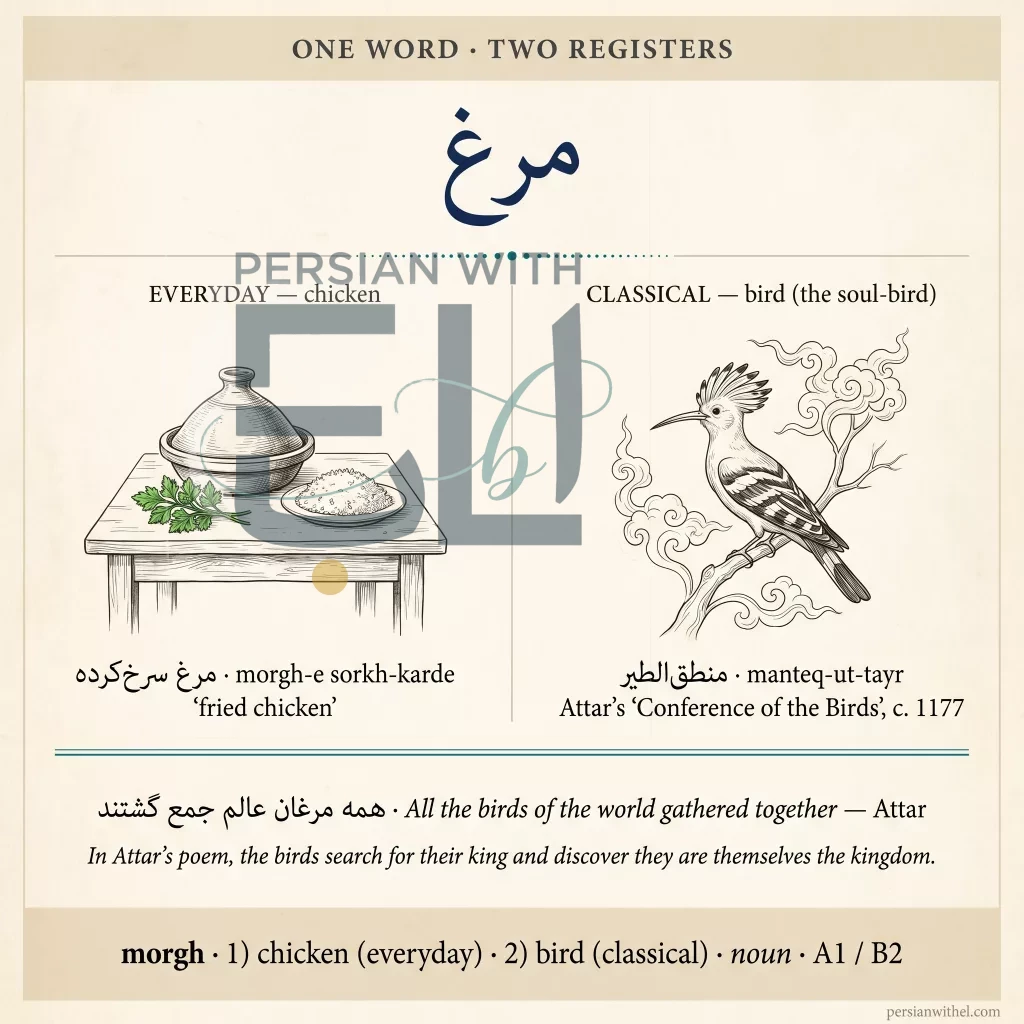
Morgh means chicken in modern Persian and bird in classical poetry. Attar’s morgh-e haq, the truth-bird, sits at the center of Sufi imagery. A1 vocabulary with poetic depth.
Gusfand is the Persian word for sheep, the engine of Iranian pastoralism and the meat in your kabâb. As an insult it means “mindless follower.” A1 vocabulary.
Gâv means “cow.” A foundational word in any farming and food vocabulary, and the source of gâv-mish, the Caspian buffalo central to northern Iranian dairy culture.
بقا (baqâ): persistence, eternity, what remains after فنا (annihilation). The second half of the Sufi pair, the divine continuance after the ego dissolves.
فنا (fanâ): annihilation, the dissolving of the self in divine love. The Sufi station that pairs with بقا (baqâ). The central drama of Hafez and Rumi.
Mere is a spelling variant of mire, the spoken-Tehrani 3rd-person-singular of raftan, “he/she goes.” One of the high-frequency verbs of everyday Iranian speech.