
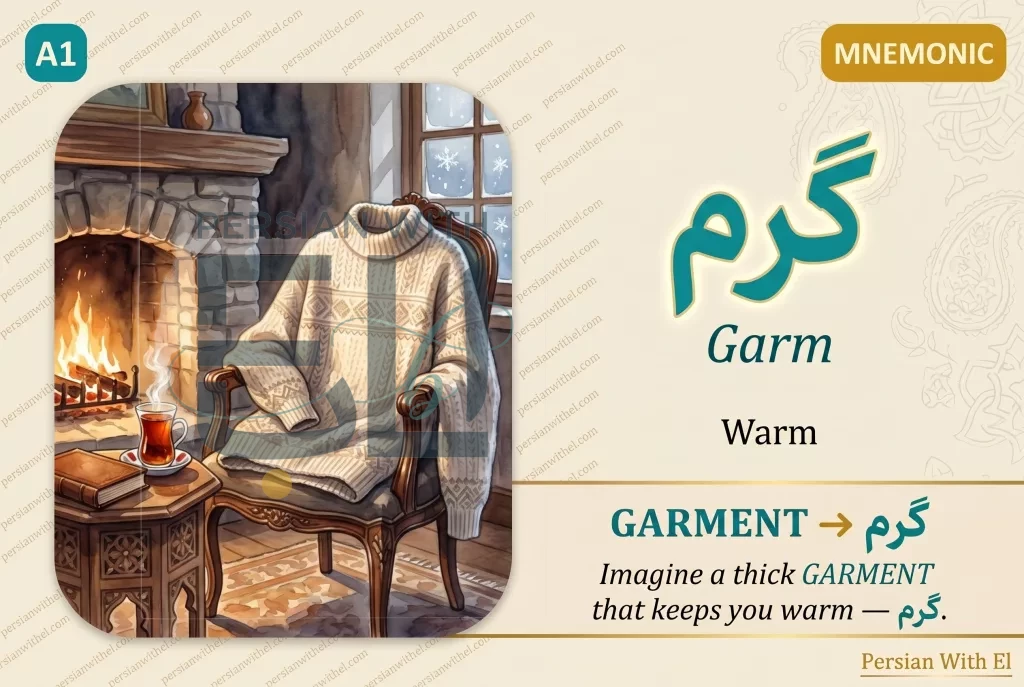
گرم
گرم (garm) means “warm” in Persian, easy to remember: think of a GARMENT that keeps you warm.
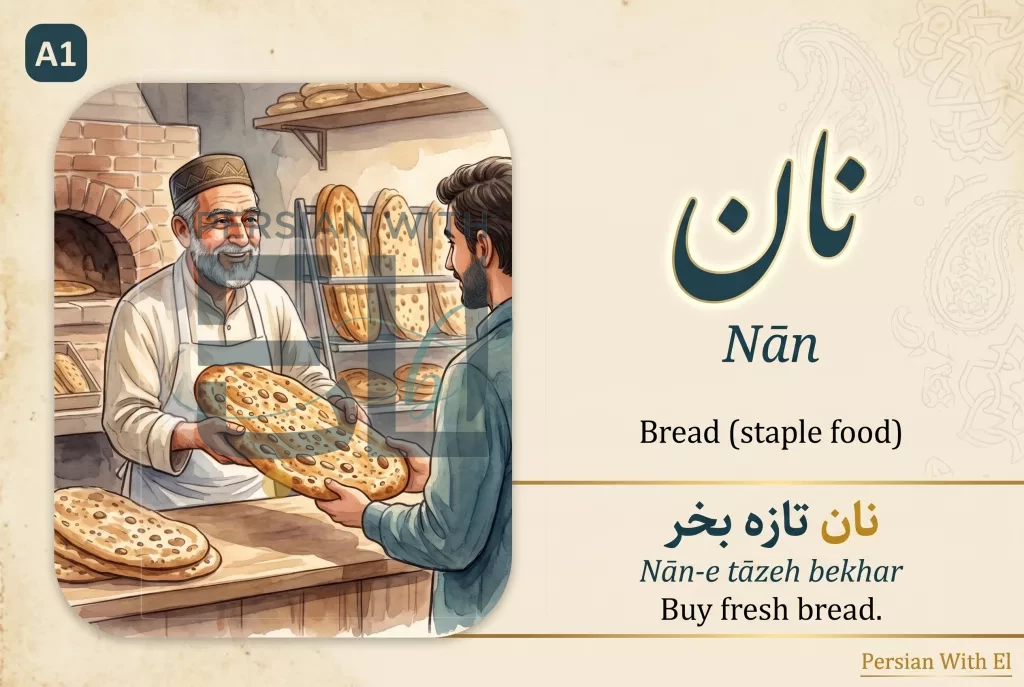
نان (nān) means “bread” in Persian, the heart of the Iranian table, with four main varieties: sangak, barbari, lavash, and taftun.
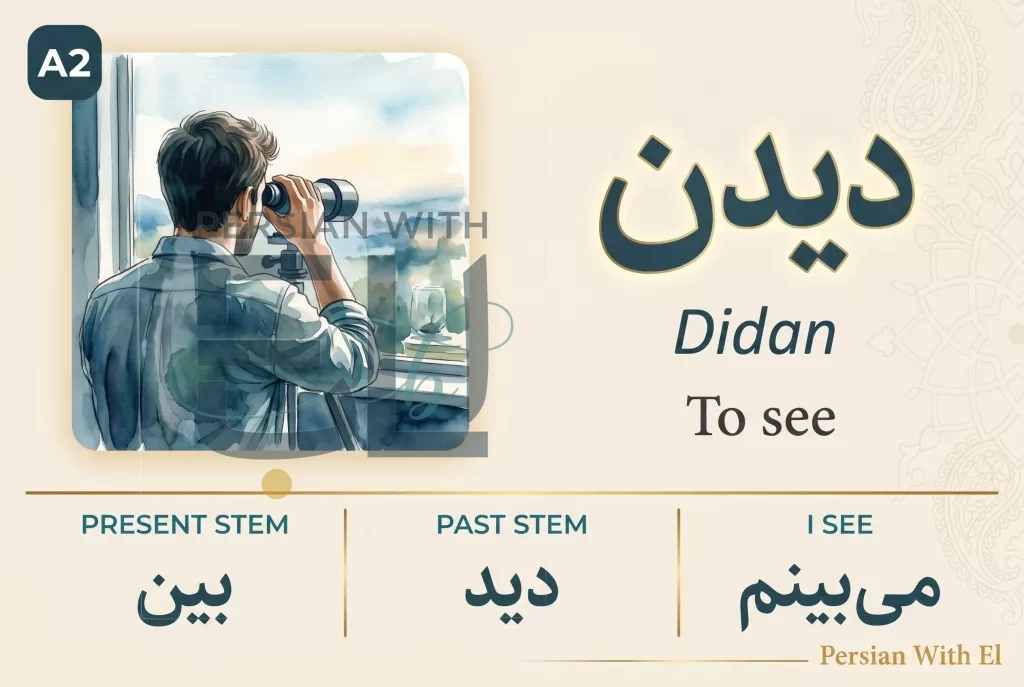
دیدن (didan) means “to see” in Persian, an irregular verb with two distinct stems: بین (present) and دید (past).
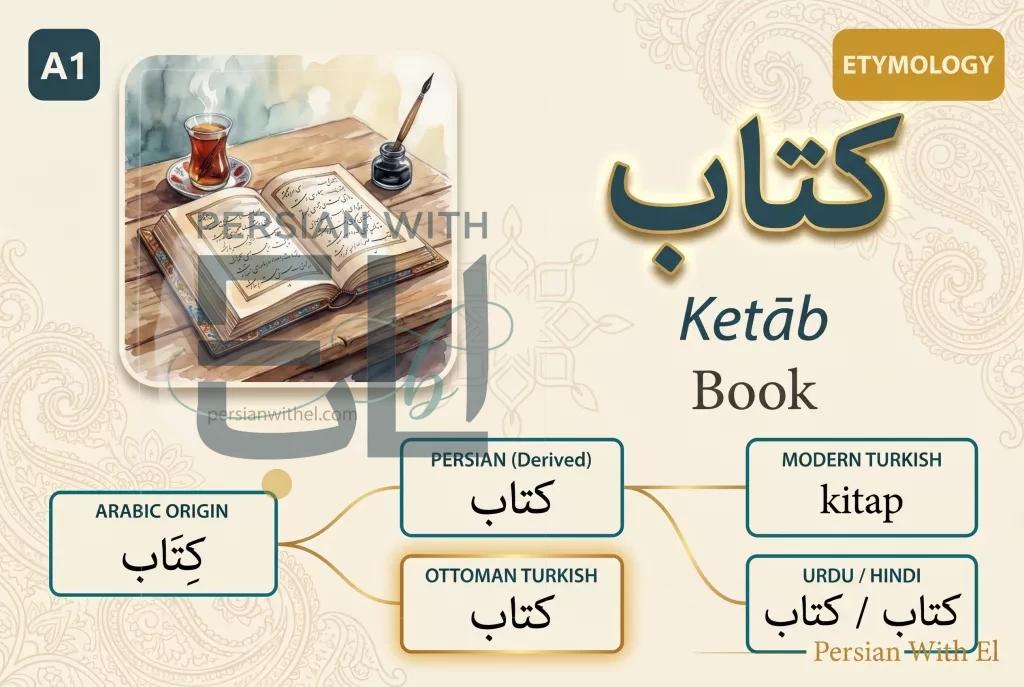
کتاب (ketāb) means “book” in Persian, a word that traces to the Arabic root ک-ت-ب meaning “to write.”
The informal Persian “how are you?”, a social greeting, not a genuine question. The expected answer is always some version of “good.”
The standard Persian farewell meaning “may God protect you.” In practice, shortened to khodafez or replaced with fele and bai bai.
The Persian system of ritualized politeness governing social interactions. Not a word but an entire cultural operating system.
The everyday Persian “thank you,” borrowed from French. Used universally in conversation despite purist objections.
The most universal Persian greeting. Derived from Arabic, meaning peace. Used in every social context from formal to street.