Ye Chai Bekhorim? — Iranian Tea and Tarof Phrases in Farsi
Iranian Tarof Tea Phrases: The Art of Refusing What You Actually Want
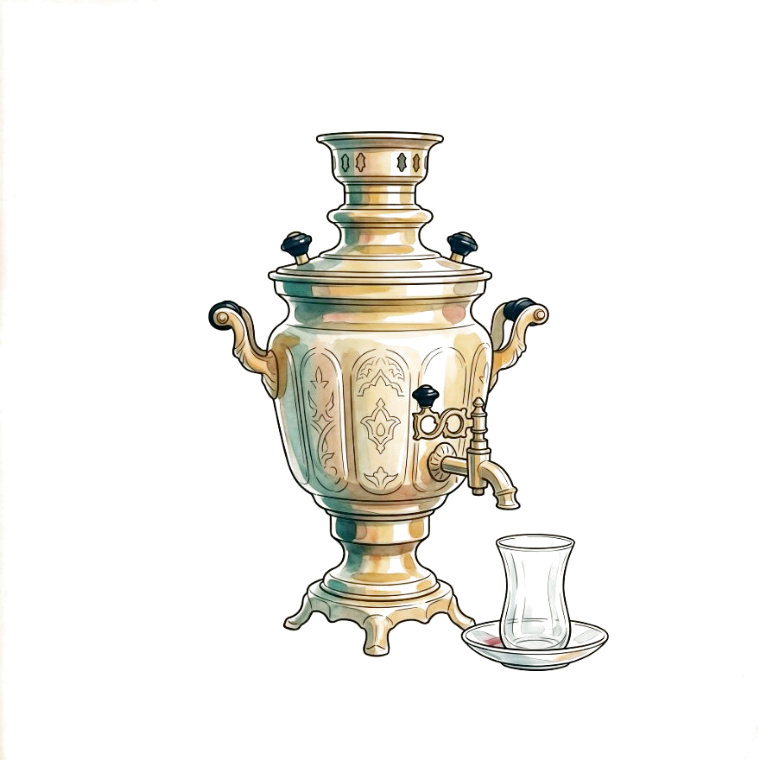
Here's a scene that plays out in every Iranian home, every single day: someone offers you tea, you say no, they insist, you say no again, they insist harder, and somehow you end up drinking three cups. Welcome to tarof (تعارف). and if you want to understand iranian tarof tea phrases, you need to live through this scene at least once. This is Episode 3 of One Scene a Week, and today we're walking into a Tehran living room where the chai is brewing and the tarof is about to get intense.
I grew up watching this exact dance between my parents and every guest who ever set foot in our house. My mom would practically chase people with a tea tray. "Befarmaaeed!" she'd say. and God help you if you thought she was just being polite. She meant it. But she also expected you to refuse at least once. That's the game.
If you've read my piece on how to say no in Farsi, you already know that "no" in Persian rarely means no. This episode is basically that concept in action. performed live over a cup of tea.
The Scene: You've Been Invited to Someone's Home
You're visiting a family friend's apartment in Tehran. You just walked in, took off your shoes (always take off your shoes), and sat down on the couch. The host, Maryam Khanom, disappears into the kitchen. You hear the kettle. You know what's coming.
The Full Dialogue
| Speaker | Farsi | Transliteration | English |
|---|---|---|---|
| Maryam | بفرمایید بشینید! راحت باشید. | Befarmaaeed beshinnid! Raahat baashid. | Please sit down! Make yourself comfortable. |
| You | ممنونم، خیلی لطف دارید. | Mamnonam, kheyli lotf daarid. | Thank you, you're very kind. |
| Maryam | یه چای بخوریم؟ تازه دم کردم. | Ye chai bekhorim? Taaze dam kardam. | Shall we have some tea? I just brewed it. |
| You | نه مرسی، زحمت نکشید. | Na mersi, zahmat nakeshid. | No thanks, don't trouble yourself. |
| Maryam | زحمت چیه! بفرمایید، یه چای که چیزی نیست. | Zahmat chiye! Befarmaaeed, ye chai ke chizi nist. | It's no trouble! Please, it's just tea. |
| You | واقعاً ممنون، لازم نیست. | Vaaghe'an mamnoon, laazem nist. | Really, thank you, it's not necessary. |
| Maryam | تو رو خدا تعارف نکن! الان میارم. | Toro khodaa taarof nakon! Alaan miaram. | For God's sake don't tarof! I'm bringing it now. |
| You | دست شما درد نکنه. | Dast-e shomaa dard nakone. | May your hand not hurt. (Thank you.) |
| Maryam | (برمیگرده با سینی چای) بفرمایید. نبات هم هست. | (Barmigarde baa sini-ye chaai) Befarmaaeed. Nabaat ham hast. | (Comes back with tea tray) Here you go. There's rock candy too. |
| You | وای خیلی ممنون، چه چای خوشرنگی! | Vaay kheyli mamnoon, che chaai-ye khoshrangi! | Oh thank you so much, what a beautiful tea! |
| Maryam | قربونت برم، نوش جان. | Ghorboonet beram, noosh-e jaan. | I'd sacrifice myself for you, enjoy it. |
Vocabulary Breakdown
| Farsi | Transliteration | Meaning | Notes |
|---|---|---|---|
| بفرمایید | befarmaaeed | please / go ahead / help yourself | The Swiss Army knife of politeness. Used for everything. |
| تعارف | taarof | polite offer / ritual politeness | The cultural concept behind all of this. |
| زحمت نکشید | zahmat nakeshid | don't trouble yourself | Your go-to polite refusal line. |
| دست شما درد نکنه | dast-e shomaa dard nakone | may your hand not hurt | Said when someone does something for you. |
| قربونت برم | ghorboonet beram | I'd sacrifice myself for you | Extremely common term of affection. Not as intense as it sounds. |
| نوش جان | noosh-e jaan | enjoy your meal/drink | Like "bon appétit" but for anything you consume. |
| دم کردن | dam kardan | to brew (tea) | Literally "to steam." Used only for tea. |
| نبات | nabaat | rock candy | Traditional tea companion. You hold it in your mouth while sipping. |
| سینی | sini | tray | Tea always comes on a tray. Always. |
| خوشرنگ | khoshrang | nice-colored / beautiful (for tea) | Complimenting tea color is a thing. Trust me. |
| تو رو خدا | toro khodaa | for God's sake / I beg you | Used to emphasize sincerity. "Stop being polite!" |
| راحت باشید | raahat baashid | be comfortable | What every host says. What every guest ignores. |
| لازم نیست | laazem nist | it's not necessary | A softer way to refuse than a flat "no." |
| ممنون | mamnoon | thank you | The most common casual thanks. Less formal than moteshakkeram. |
Cultural Note: The Tarof Dance. How Many Times Do You Refuse?
Okay, so here's the thing about tarof that confuses every non-Iranian: when someone offers you something, you're supposed to refuse. But you're also supposed to eventually accept. The question is. how many rounds?
The standard tarof dance goes like this: offer → refuse → insist → refuse → insist harder → accept. That's roughly three rounds. Two refusals, then you give in. If someone offers you something and you accept immediately, it can feel a bit... eager. Like you were waiting for it. Which maybe you were. but you don't show that.
Now here's where it gets tricky. Sometimes an offer IS just tarof. Your taxi driver says "it's nothing, don't worry about paying". he doesn't mean it. Your friend's mom offers to pack you leftover food. she absolutely means it, and you should take it. How do you tell the difference? Experience, mostly. But a solid rule: if they offer three times and their body language stays the same, they mean it. If they offer once and their hand is already reaching for the door, it was tarof.
I wrote a whole thing about why Iranians want to sacrifice themselves for taxi drivers. ghorboonet beram is part of that same affection system. These phrases sound dramatic in English, but in Persian they're just... warmth. That's how we show love.
Spoken vs. Formal: How Real Tehranis Actually Talk
The dialogue above is already pretty colloquial, but let me break down the key differences between textbook Persian and what you'll actually hear in someone's living room.
| Formal / Written | Spoken / Tehrani | What Changed |
|---|---|---|
| بفرمایید (befarmaaeed) | بفرما (befarmaa) | Dropped the -eed ending. Casual but still polite. |
| حالتون چطوره؟ (haaletun chetor-e?) | چطوری؟ (chetori?) | Collapsed the whole sentence into one word. |
| زحمت نکشید (zahmat nakeshid) | زحمت نکش (zahmat nakesh) | Informal "you" form. Used with friends, not elders. |
| دست شما درد نکنه (dast-e shomaa dard nakone) | دستت درد نکنه (dastet dard nakone) | Switched from shomaa (formal you) to -et (informal). |
| تشکر میکنم (tashakkor mikonam) | مرسی (mersi) | French loanword. Everyone uses it. No one thinks twice. |
Quick tip: when you're in someone's home and they're older than you, stick with the formal versions. Befarmaaeed, not befarmaa. Shomaa, not to. You can always dial it down once they tell you "raahat baash". be comfortable. That's your green light to relax the formality a notch.
Practice Tips: How to Drill This Scene
This is one of those dialogues you can practice with yourself, out loud, playing both parts. It sounds weird, but it works. Here's what I'd do:
Step 1: Read the whole dialogue out loud three times. Don't worry about perfect pronunciation yet. just get the rhythm. Tarof has a rhythm. It's almost musical.
Step 2: Cover the English column. Can you understand the Farsi from transliteration alone? If not, go back and review the vocabulary table.
Step 3: Cover everything except the English column. Can you produce the Farsi? This is the hard part. Don't be discouraged if you can't yet.
Step 4: Throw the key phrases into your Anki deck. Befarmaaeed, zahmat nakeshid, dast-e shomaa dard nakone, ghorboonet beram. these four phrases will carry you through 80% of polite interactions in Iran.
The beauty of tarof phrases is that they're formulaic. You don't need to think on your feet. You just need to memorize the script. and Iranians basically follow the same script every time.
5 Common Mistakes Foreigners Make with Tarof
1. Accepting immediately. Someone offers you tea and you say "yes please!" right away. Not wrong, but it skips the dance. You'll get a surprised look.
2. Refusing too many times. Three refusals is the max. After that, you're not being polite. you're being difficult. Or worse, you're insulting their hospitality.
3. Taking tarof literally. When a shopkeeper says "ghabel nadaare" (it's not worthy of you / it's free), he does NOT mean it's free. Pay the man.
4. Forgetting to compliment. When you finally accept the tea, say something nice. "Che chaai-ye khoshrangi" (what beautiful tea!) goes a long way. Iranians put effort into their tea. Acknowledge it.
5. Not reciprocating. Tarof is a two-way street. If someone hosted you, you owe them an invitation back. It doesn't have to be equal. just show that you noticed their generosity.
FAQs
What does "befarmaaeed" mean in Farsi?
How many times should you refuse in Iranian tarof?
What does "ghorboonet beram" actually mean?
Is tarof only about tea in Iran?
What's the difference between "zahmat nakeshid" and "dast-e shomaa dard nakone"?
Ready to practice tarof in a real conversation?
Want to drill this scene's vocab with flashcards? Try ZabanYar. it's free and works offline.
nnFor the full house visit guide with all the tarof stages. from the tea opening to the fruit offering to the 30-minute goodbye. read the <a href="/learning-guides/iranian-house-visit-tarof/">art of the Iranian house visit</a>. The only way to really get tarof right is to practice it with someone who grew up doing it. I can walk you through the rhythm, the intonation, the whole thing. book a lesson with me on Preply and let's have chai together (virtually).
📚 One Scene a Week. Series Navigation
← Episode 2: Agha, Tajrish Miri? | Series Index | Episode 4: Alo, Bebakhshid →
Get it wrong and the worst that happens is a warm laugh and a story they’ll tell for years. Get it right — refuse the tea twice, accept on the third — and you’ll watch a face open up. You didn’t just speak Persian. You played the game.
A teacher from Tabriz, based in Milano. 5.0 on Preply across 42 reviews, 1,100+ lessons taught. He curates the growing dictionary behind this site.