Baa Haafez Begu — Farsi Goodbye Poetry (Finale)
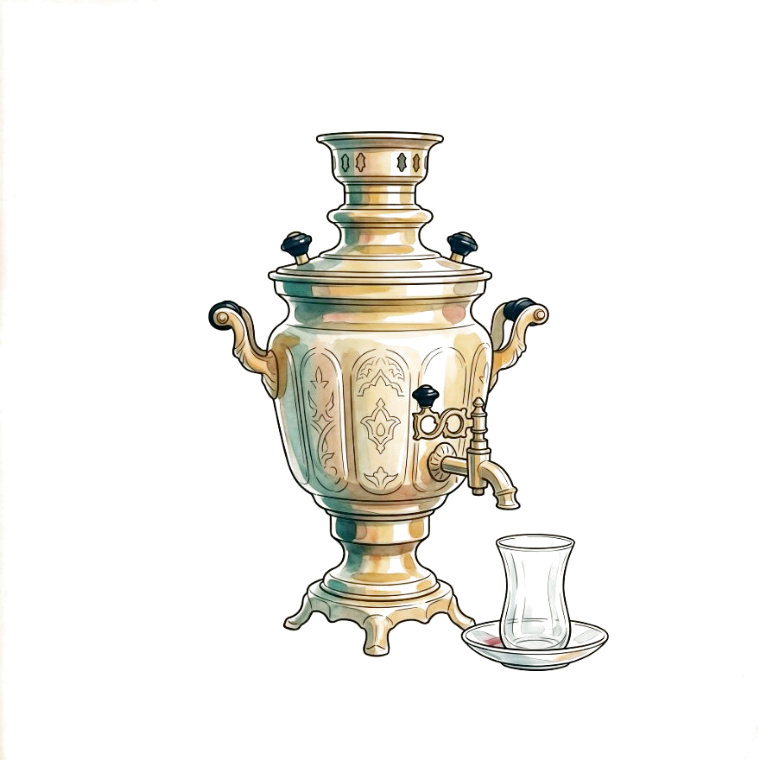
Twenty-four episodes ago, you walked into a room and said salam, chetori. Tonight, you're sitting on the floor of an apartment in Tehran, a glass of tea going cold in your hand, listening to someone recite Hafez while your flight leaves in nine hours. This is how Farsi goodbye poetry works. not at the airport, not with a wave, but with Hafez expressions that have been carrying Iranian goodbyes for six hundred years.
This is the last episode. The finale of One Scene a Week. I've been building toward this one since the beginning, and if you've been following along. through taxis and tea houses and hospitals and funerals. then you already know: Persian doesn't do quick goodbyes.
This is Episode 24 of One Scene a Week. Season 3: Going Deep. The series finale.
The Scene: Shab-e She'r in Tehran
It's your last night in Iran. Your friend Shirin has gathered people at her apartment in the Yoosef Abad neighborhood. There's no formal plan. just friends, tea, fruit, and at some point someone will pull out the Divaan-e Haafez (دیوان حافظ). the collected works of Hafez. This is a shab-e she'r (شب شعر). a poetry night. though nobody calls it that. It's just what happens when Iranians get together and someone feels something.
The apartment is warm. There are about ten people, some on the couch, most on the floor on cushions. Pomegranates and tangerines on the sofreh. Someone's playing Shajarian quietly on a speaker. You've been in Iran for three weeks and tomorrow morning you fly back to your life. Everyone in this room knows it.
Faal-e Haafez. The Tradition
Before we get to the dialogue, you need to understand faal-e Haafez (فال حافظ). Hafez divination. Every Iranian home has a copy of Hafez's Divaan. It's not decoration. It's used.
Here's how it works: you hold the book closed, make a silent wish or ask a question in your heart, then open to a random page. The poem you land on is your faal. your fortune, your answer, your message from Hafez across the centuries. Iranians do this at Nowruz, at gatherings, before big decisions, or just because someone says "biyaa faal begirim" (بیا فال بگیریم. "let's take a faal").
Is it superstition? Sort of. But it's also literature functioning as a living oracle. Hafez wrote with such layered ambiguity that almost any ghazal can feel like it's speaking directly to your situation. That's not an accident. it's why he's survived seven centuries. His poetry is personal enough to be everyone's mirror.
If you want the deeper context on Persian poetry traditions, I've written about it in the Persian Poetry series.
The Full Dialogue
Context: The evening has been going for a couple of hours. Conversation, laughter, stories. Then Shirin brings out the Divaan.
Shirin:
بچهها، بیاین فال حافظ بگیریم. مخصوصاً برای مهمون عزیزمون که فردا میره.
Bacheha, biyaayin faal-e Haafez begirim. Makhsoosan baraaye mehmoon-e azizamoon ke fardaa mire.
Guys, let's take a Hafez faal. Especially for our dear guest who's leaving tomorrow.
Arash (another friend):
آره بابا، ببینیم حافظ چی میگه. نیّت کن!
Aare baabaa, bebinim Haafez chi mige. Niyyat kon!
Yeah, let's see what Hafez says. Make your intention!
You:
نیّتم اینه که... برگردم.
Niyyatam ine ke... bargardam.
My intention is that... I come back.
(Silence for a moment. Shirin smiles, opens the book at random. She reads the first couplet aloud.)
Shirin (reading Hafez):
مرا مهرِ سیَهچشمان ز سر بیرون نخواهد شد
قضایِ آسمان است این و دیگرگون نخواهد شد
Maraa mehr-e siyah-cheshmaan ze sar biroon nakhaahed shod
Ghazaa-ye aasemaan ast in o digargun nakhaahed shod
My love for the dark-eyed ones will never leave my head
This is heaven's decree, and it will not change
Arash:
اوووه! ببین چی اومد. یعنی حافظ گفته دلت اینجا میمونه.
Ooooh! Bebin chi oomad. Ya'ni Haafez gofte delet injaa mimoone.
Ohhh! Look what came up. It means Hafez says your heart stays here.
You:
حافظ همیشه حق داره.
Haafez hamishe hagh daare.
Hafez is always right.
(People laugh, but it's the kind of laughter that's close to something else. Then it gets quieter. Nasrin, a friend you've gotten close to over the trip, speaks up.)
Nasrin:
جدی میگم، دلمون برات تنگ میشه. این سه هفته خیلی زود گذشت.
Jeddi migam, delamoon barat tang mishe. In se hafte kheyli zood gozasht.
I'm serious, we'll miss you. These three weeks went by so fast.
You:
منم دلم تنگ میشه. خیلی زیاد. نمیدونم چجوری بگم...
Manam delam tang mishe. Kheyli ziyaad. Nemidunam chejoori begam...
I'll miss you too. A lot. I don't know how to say it...
Shirin:
نمیخواد بگی. ما میفهمیم.
Nemikhaad begi. Maa mifahmim.
You don't need to say it. We understand.
Arash:
یه شعر بخون برامون! فارسی! تا حالا یاد گرفتی دیگه.
Ye she'r bekhoon baraamoon! Faarsi! Taa haalaa yaad gerefti dige.
Recite a poem for us! In Farsi! You've learned by now, right?
You (reciting, slowly):
هرجا که باشی، آسمان همین رنگه
هرجا که باشی، یاد تو با منه
Harjaa ke baashi, aasemaan hamin range
Harjaa ke baashi, yaad-e to baa mane
Wherever you are, the sky is the same color
Wherever you are, the memory of you is with me
(It's not perfect. Your accent shows. But the room goes quiet, and Nasrin wipes her eyes.)
Nasrin:
ای بابا... اشکمو درآوردی.
Ey baabaa... ashkamo daraavordi.
Oh come on... you made me cry.
You:
قول میدم برگردم. به امید دیدار.
Ghol midam bargardam. Be omid-e didaar.
I promise I'll come back. Until we meet again.
Shirin:
انشالله که زودتر از اونی که فکر میکنی برمیگردی.
Enshaallaah ke zoodtar az ooni ke fekr mikoni barmigardi.
God willing, you'll come back sooner than you think.
Arash:
با حافظ! ولی حافظِ ما، نه حافظِ کتاب.
Baa Haafez! Vali Haafez-e maa, na Haafez-e ketaab.
With Hafez! But our Hafez. not the book's Hafez.
(Everyone laughs. "Baa Haafez". "with Hafez". is a beautiful farewell because "Hafez" literally means "protector/guardian." So "baa Haafez" means both "goodbye" and "go with the one who protects." Arash is making a joke that works on every level.)
You:
با حافظ، همگی. خدا نگهدارتون.
Baa Haafez, hamegi. Khodaa negahdaaretoon.
Goodbye, everyone. May God keep you.
Vocabulary Breakdown
| Farsi | Transliteration | Meaning | Notes |
|---|---|---|---|
| فال حافظ | faal-e Haafez | Hafez divination | Opening the Divaan to a random page for guidance |
| دیوان حافظ | Divaan-e Haafez | Collected works of Hafez | Found in virtually every Iranian home |
| شب شعر | shab-e she'r | Poetry night | Informal gathering where poetry is recited |
| نیّت کن | niyyat kon | Make your intention | The wish/question you hold before opening the book |
| دلم تنگ میشه | delam tang mishe | I will miss [you] | Literally "my heart will become tight". one of Persian's most beautiful constructions |
| به امید دیدار | be omid-e didaar | Until we meet again | Literally "in hope of seeing." The most elegant Persian goodbye |
| با حافظ | baa Haafez | Goodbye | "With the Protector". Haafez means guardian. Double meaning with the poet |
| انشالله باز میبینمت | enshaallaah baaz mibinamet | God willing I'll see you again | How Iranians actually say goodbye. always with hope of return |
| خدا نگهدارتون | khodaa negahdaaretoon | May God keep/protect you | Formal farewell, warm and respectful |
| قول میدم | ghol midam | I promise | Literally "I give a promise" |
| شعر خوندن | she'r khoondan | To recite poetry | Literally "to read poetry". used for both reading and reciting |
| اشکمو درآوردی | ashkamo daraavordi | You made me cry | Literally "you pulled out my tears". spoken, affectionate |
The Art of the Persian Goodbye
Iranians don't do quick exits. I've written before about the slang that makes Persian feel alive, and the goodbye ritual is where all of it collides. the taarof, the emotion, the promises, the God-willing's.
A Persian goodbye goes something like this:
You announce you're leaving. Everyone protests. "Kojaa? Zood-e!" (Where? It's early!). You insist. They insist harder. You sit back down for another tea. Twenty minutes later you try again. This time they let you stand up but walk you to the door. At the door, there are hugs, more protests, promises to call, invitations to come back, blessings from God. Then you're in the hallway and someone opens the door again to say one more thing. Then you're in the elevator and your phone buzzes with a voice message: "Enshaallaah be salamat beresi" (God willing you arrive safely).
This isn't inefficiency. It's love expressed through time. Every minute of delay is proof that your leaving matters. I've seen Iranians spend forty-five minutes saying goodbye to someone they'll see again next week. When the goodbye is real. when it's international, when there's no clear "next time". it's something else entirely.
The phrase be omid-e didaar (به امید دیدار) captures this perfectly. Not "goodbye." Not "see you." But "in the hope of seeing". a farewell built on longing rather than certainty. That's Persian in one phrase.
Spoken vs. Formal. The Farewell Blend
This scene shows something that's been true all season: at the moments that matter most, spoken and formal Persian stop being separate registers and become one language.
The poetry quotes are literary. maraa mehr-e siyah-cheshmaan ze sar biroon nakhaahed shod is 14th-century verse with archaic grammar that no one uses in conversation. But the reaction to it. ey baabaa, ashkamo daraavordi. is the most informal spoken Persian possible.
The goodbyes blend both too. Be omid-e didaar is formal, almost literary. Baa Haafez is neutral. works in any register. Khodaa negahdaaretoon is polite spoken. And enshaallaah baaz mibinamet is pure everyday speech.
If you've followed this series from the beginner's guide through all 24 episodes, you've watched these registers blur in real time. That's not a bug in Persian. it's the feature. The language rewards you for being able to move between registers, and a moment like a poetry-night farewell is where that skill shines.
Cultural Note: Why Every Iranian Home Has Hafez
Khajeh Shams-od-Din Mohammad Hafez-e Shirazi wrote his ghazals in 14th-century Shiraz. Seven hundred years later, his book outsells everything in Iran except the Quran. That's not hyperbole. it's a publishing statistic.
Why? Because Hafez wrote about wine and God and love and loss with such deliberate ambiguity that every line can mean three things at once. Is "the beloved" a woman, God, or the idea of beauty itself? Yes. All three. Always. That ambiguity is why faal-e Haafez works. the poems are mirrors, not messages. You bring your own meaning.
At Nowruz (Persian New Year), the Haft-Sin table includes a Divaan-e Haafez. At weddings, someone takes a faal. At this farewell poetry night, Hafez provides the language when your own words aren't enough. He's not a dead poet in Iran. He's a living presence. the third person in every emotional conversation.
His tomb in Shiraz (Haafezieh / حافظیه) is one of the most visited sites in Iran. People go there on dates. They go there to grieve. They go there to sit and read and argue about what a couplet means. That's the relationship Iranians have with their poetry. it's not academic. It's intimate.
The Series Finale. 24 Episodes, One Language
This is it. The end.
When I started One Scene a Week, the idea was simple: teach Persian the way it's actually spoken, one real situation at a time. No textbook grammar drills. No "repeat after me." Just scenes from a life lived in Farsi. messy, emotional, funny, and real.
Season 1: The Basics. You learned to say hello (salam, chetori), order food, take a taxi, haggle at the bazaar, navigate ta'arof, and survive your first awkward phone call. The building blocks. You couldn't do much yet, but you could exist. greet people, feed yourself, get where you needed to go.
Season 2: Social Life. The stakes got higher. You went to a mehmooni (party), dealt with family drama, handled a doctor's visit, argued in traffic, and figured out how to talk about money and feelings. Your Persian stopped being survival and started being social. You had opinions. You could express them. badly at first, then better.
Season 3: Going Deep. This is where language became culture. Wedding ceremonies. Job interviews. Political conversations you probably shouldn't have had. Hospital emergencies. Mourning the dead. And now, tonight, saying goodbye with Hafez.
The arc mirrors how language learning actually works. You don't go from zero to poetry in a straight line. You go from salam to ordering food to making a friend to fighting with that friend to crying at a funeral to sitting on a floor in Tehran reciting a couplet you barely understand while someone you care about tries not to cry.
That's what speaking a language means. Not accuracy. connection.
5 Frequently Asked Questions
What does "baa Haafez" mean in Farsi?
What is faal-e Hafez and how does it work?
How do you say "I will miss you" in Persian?
What does "be omid-e didaar" mean?
Why is Hafez so important in Iranian culture?
Episode Navigation
← Episode 23: Tesliyat Migam | Series Index | Series Complete! Continue with the Persian Poetry Series
I didn't plan for this series to mean as much to me as it does. When I wrote Episode 1, I was just a guy with a blog and a Preply profile trying to teach some Persian. Twenty-four episodes later, I've written about love and death and taarof and traffic jams and hospital panic and wedding drums and now Hafez on someone's living room floor.
If you've been reading along. from Episode 1 to this moment. thank you. You started with salam and you ended with Hafez. That's not a bad arc for a language you picked up on the internet.
And if this is where you found me, start from the beginning. The full series is here. It's better in order.
Be omid-e didaar. Wherever you are, the sky is the same color.
Want to drill this scene's vocab with flashcards? Try ZabanYar. it's free and works offline.
nnIf you want to keep going. if twenty-four episodes weren't enough and you want a real teacher who'll push you, correct you, and make you recite Hafez until your accent doesn't make people cry for the wrong reasons. come find me on Preply. The goodbye doesn't have to be permanent.
Get it wrong and the worst that happens is a warm laugh and a story they’ll tell for years. Get it right — refuse the tea twice, accept on the third — and you’ll watch a face open up. You didn’t just speak Persian. You played the game.
A teacher from Tabriz, based in Milano. 5.0 on Preply across 42 reviews, 1,100+ lessons taught. He curates the growing dictionary behind this site.