
Kitchen Farsi: The Language Your Parents Speak at Home
Kitchen Farsi is the heritage language your parents speak at home. Learn what it is, why it matters, and how to build on it.
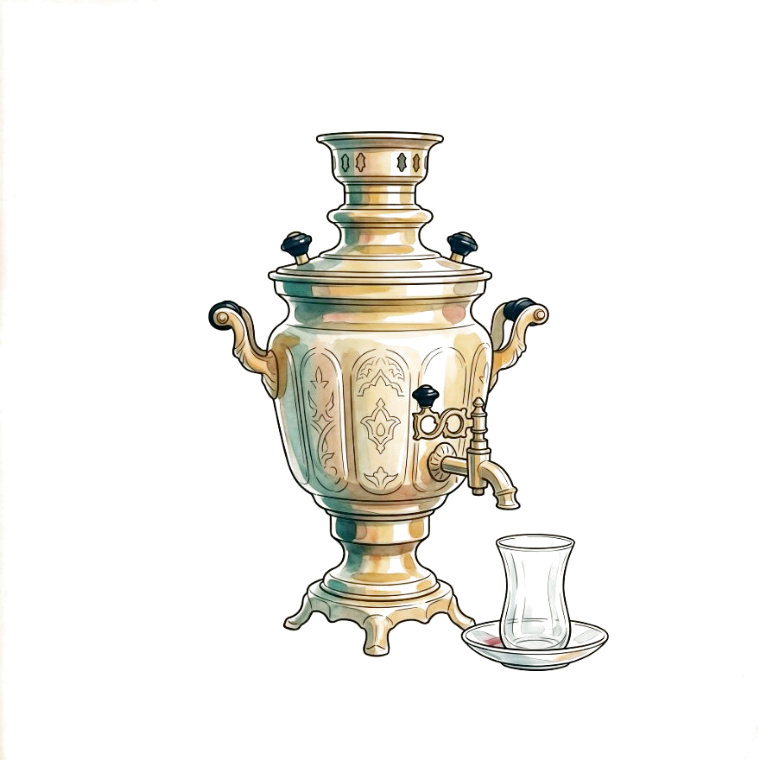
You know exactly what kitchen Farsi is, even if you've never heard the term. It's the Farsi your parents speak at home. the one mixed with English, heavy on food vocabulary, powered by commands and terms of endearment, and completely useless in a university Persian class.
"Pass me the کفگیر (kafgir, spatula)." "بیا غذا حاضره (biâ ghazâ hâzere, come on, food's ready)." "Tell your brother دستهاشو بشوره (dast-hâsho beshure, to wash his hands)."
If this sounds like your childhood soundtrack, congratulations: you speak kitchen Farsi. And I'm here to tell you that it's not broken Farsi, it's not fake Farsi, and it's not something to be embarrassed about. It's a legitimate linguistic foundation, and with the right approach, you can build full fluency on top of it.
What Kitchen Farsi Actually Is
Linguists call it a "heritage register" or "domestic register." It's the language that develops when an immigrant family uses their native language primarily at home, for household functions, while the community language (English, Italian, German, whatever) handles everything else.
Kitchen Farsi typically includes:
Food and cooking vocabulary. Most heritage speakers know more food words in Farsi than in English. قورمه سبزی (ghorme sabzi), تحدیگ (tahdig), آش رشته (âsh reshte), تهچین (te-chin). these words live in Farsi because the foods live in Iranian culture.
Family terms. مامان (mâmân, mom), بابا (bâbâ, dad), خاله (khâle, maternal aunt), عمو (amu, paternal uncle), مامانبزرگ (mâmân bozorg, grandma). the family vocabulary is always in Farsi because that's where the emotional connection lives.
Commands and household directives. بیا (biâ, come), برو (boro, go), بشین (beshin, sit), بلند شو (boland sho, get up), ساکت باش (sâket bâsh, be quiet), تمیز کن (tamiz kon, clean up). imperative forms dominate kitchen Farsi because parents issue commands in their strongest language.
Terms of endearment and curses. عزیزم (azizam, my dear), جونم (junam, my soul), قربونت برم (qorbunit beram, I'd sacrifice myself for you). and on the flip side, the occasional خاک تو سرت (khâk tu saret, "dirt on your head". an expression of frustration).
Emotional expressions. وای (vây, oh my), خدا مرگم بده (khodâ margam bede, "God give me death". dramatic distress), الهی بمیرم (elâhi bemiram, "may I die". sympathy/love). the emotional register stays in Farsi because emotions run deepest in the first language.
What Kitchen Farsi Is Missing
Here's where the gaps live, and knowing your gaps is the first step to filling them:
Abstract vocabulary. You probably can't discuss politics, philosophy, science, or current events in Farsi. Words like دموکراسی (demokrâsi, democracy), اقتصاد (eqtesâd, economy), تحقیق (tahqiq, research) weren't part of household conversation.
Academic and professional language. Anything related to school, work, or formal settings. دانشگاه (dâneshgâh, university), مصاحبه (mosâhebe, interview), قرارداد (qarârdâd, contract).
Literacy. Many kitchen Farsi speakers can't read or write Persian script. They hear and speak Farsi but are functionally illiterate in it.
Formal register. Kitchen Farsi is entirely colloquial. The formal/literary register (کتابی. ketâbi) that you'd encounter in newspapers, speeches, or official settings is basically a foreign language to most heritage speakers.
Complex grammar. Kitchen Farsi gets the basics right (word order, common verb forms, everyday prepositions) but often avoids complex constructions: relative clauses, passive voice, subjunctive mood, elaborate compound verbs.
Why Kitchen Farsi Is Real Language
I need to push back on something I hear constantly from heritage speakers: "I don't really speak Farsi."
Yes, you do. Kitchen Farsi is Persian. It's a specific register of Persian, just like how a Texan's kitchen English is real English even though it sounds nothing like a BBC newscast.
What you have:
- Phonology: Your accent is probably good. You heard Farsi from birth, so the sounds are wired into your brain.
- Prosody: You know the rhythm and intonation of Persian. This is incredibly hard to learn as an adult. you got it for free.
- Cultural pragmatics: You know when to say قربونت (qorbunit) and when to use تعارف (ta'ârof). This social knowledge takes years for L2 learners to develop.
- Core vocabulary: You have hundreds, maybe thousands, of Farsi words already stored. They just need activating and expanding.
- Emotional authenticity: When you speak Farsi, it sounds Iranian because you are Iranian. No textbook can create that.
The heritage Farsi learner guide breaks down exactly how to use these strengths to your advantage.
Common Kitchen Farsi Phrases (That Are Actually Useful)
Let's validate your existing knowledge. If you know these, you're further along than you think:
دستت درد نکنه. dastet dard nakone. "may your hand not hurt". said to someone who cooked, cleaned, or did any favor. This is core Iranian politeness.
نوش جان. nush-e jân. "may it nourish your soul". said to someone eating. The Farsi "bon appetit."
خسته نباشی. khaste nabâshi. "may you not be tired". said to someone who worked hard. You probably heard your parents say this to each other every evening.
قابل نداره. qâbel nadâre. "it has no worth". said when someone thanks you for something (ta'arof. "it was nothing").
چشمت روشن. cheshmet roshan. "may your eye be bright". congratulations, used for good news.
سلامتی. salâmati. "health". used as a toast (like "cheers") and as a response to "thank you."
الهی شکر. elâhi shokr. "thank God". reflexive response to any good news.
بفرمایید. befarmâyid. "please, go ahead". the Swiss Army knife of Persian politeness: come in, sit down, eat, take this, after you.
If you recognized most of these. you have a solid foundation. These aren't "basic" phrases; they're the social infrastructure of Persian interaction.
How to Build on Kitchen Farsi
Here's the strategy for going from kitchen Farsi to actual fluency:
Step 1: Map What You Know
Spend a week paying attention to every Farsi word and phrase you use or understand. Write them down. You'll be surprised how many there are. This is your vocabulary audit.
Step 2: Expand by Domain
Pick one area at a time to expand: خرید (kharid, shopping), سلامت (salâmat, health), کار (kâr, work), سفر (safar, travel). Add 20-30 words in that domain before moving to the next. The food vocabulary post is a natural starting point since food is already your strongest domain.
Step 3: Add Literacy
Learning to read Persian script is the single biggest multiplier for heritage speakers. Your spoken vocabulary suddenly becomes readable, and you can self-study using Persian texts. Start with the alphabet, then practice reading words you already know how to say.
Step 4: Formalize Your Grammar
Kitchen Farsi grammar is intuitive. you "feel" what's right. But formalizing that intuition (learning why you say things the way you do) gives you the tools to construct sentences you've never heard before.
Step 5: Consume Media
Iranian movies, podcasts, Instagram accounts, music. Start with content where you understand 60-70% (challenging but not impossible) and work up. Your kitchen Farsi gives you an enormous head start here. you already have the listening comprehension base.
The Emotional Side
Kitchen Farsi carries weight that goes beyond vocabulary. For many diaspora Iranians, it's the language of:
- Your mother's voice calling you to dinner
- Your grandmother's prayers
- The background noise of family gatherings you half-understood
- Arguments you weren't supposed to hear but understood anyway
- Love expressed through food, touch, and words that English can't replace
When heritage speakers say "I don't really speak Farsi," what they often mean is "my Farsi isn't good enough to earn the respect of 'real' Farsi speakers." That's internalized shame talking. Your kitchen Farsi is the most authentic Farsi there is. it's the Farsi of Iranian homes worldwide, and it's the language your family chose to keep alive even when it would have been easier to let it go.
Build on it. Be proud of it. And stop apologizing for it.
Check out the diaspora identity hub for more on the relationship between language, identity, and the Iranian experience abroad.
FAQ
What is "kitchen Farsi" and is it real Persian?
Can I become fluent in Farsi if I only know kitchen Farsi?
Why do heritage Farsi speakers mix English and Persian?
How do I expand my kitchen Farsi vocabulary?
Should I be embarrassed about speaking kitchen Farsi?
Your kitchen Farsi is the starting line, not the finish line. Our app, ZabanYar, is coming soon.
Ready to take your kitchen Farsi to the next level with a native speaker who gets the diaspora experience? I teach on Preply. let's turn your foundation into real fluency.
Get it wrong and the worst that happens is a warm laugh and a story they’ll tell for years. Get it right — refuse the tea twice, accept on the third — and you’ll watch a face open up. You didn’t just speak Persian. You played the game.
A teacher from Tabriz, based in Milano. 5.0 on Preply across 52 reviews, 1,652 lessons taught. He curates the growing dictionary behind this site.
 Persian Culture & TraditionsMashhad Lawyer Detention: 12 Persian Words for InjusticeDec 2025
 Persian Culture & TraditionsPersian Names: Meanings, History, and How to Pronounce ThemApr 2026Persian Culture & TraditionsIran Cafe Crackdown: The Persian of Coffee Resistance (2026)Dec 2025
 Persian Culture & TraditionsIranian Social Customs, Humor and Internet Culture (2026)Mar 2026Persian Culture & TraditionsNarges Mohammadi 2025: Why Tehran Panicked in a GraveyardMar 2026
 Persian Culture & TraditionsBetween Two Languages: The Iranian Diaspora and FarsiMar 2026