
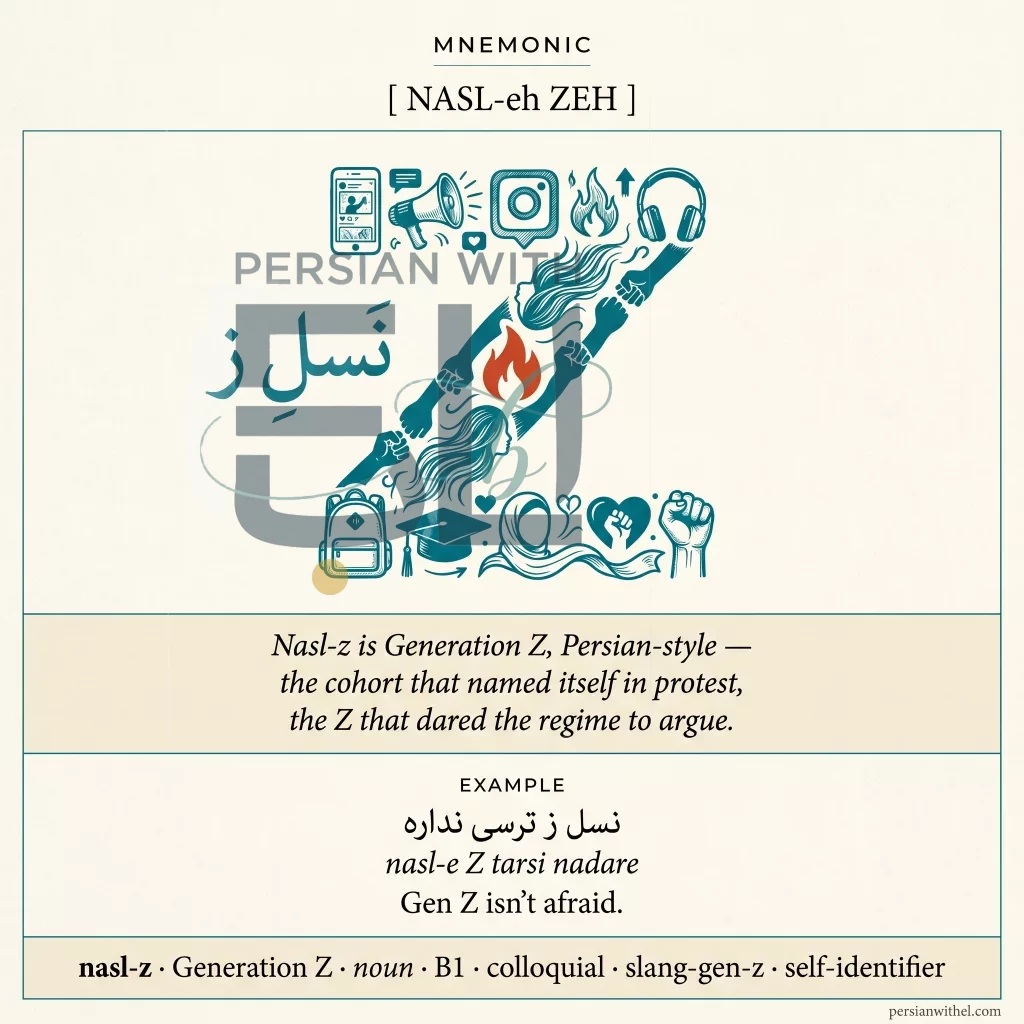
نسل زد
Nasl-z (نسل زد) is the Persian name for Generation Z, the Iranians born roughly 2000 to 2015 who led the Mahsa protests and claim the term proudly.
Nasl-z (نسل زد) is the Persian name for Generation Z, the Iranians born roughly 2000 to 2015 who led the Mahsa protests and claim the term proudly.
Etesab-keshvari (اعتصاب کشوری) means nationwide strike, the labor escalation call used by truckers, bazaaris, oil workers, and teachers in Iran.
Na-be-edam (نه به اعدام) means no to execution, the abolitionist hashtag against the Islamic Republic’s use of capital punishment on protesters.
Eteraz-saraseri (اعتراضات سراسری) means nationwide protests. The mobilization phrase used to call for action across all Iranian provinces, not just Tehran.
Dokhtar-dalir (دختر دلیر) means brave girl, the valorization Iranians use for women who pulled off hijabs in public and led the 2022 protests.
Ta-rahaii (تا رهایی) means until freedom. The closing phrase of Iranian protest chants and posts since 2022, a sign-off that refuses to declare victory.
Edam-nakonid (اعدام نکنید) is the protest slogan do not execute. It surged in October 2022 against regime execution warrants for arrested protesters.
Gharbzadeh (غرب زده) means westoxified. Coined by Jalal Al-e Ahmad in 1962, now a regime slur against anyone the Islamic Republic reads as Western-influenced.
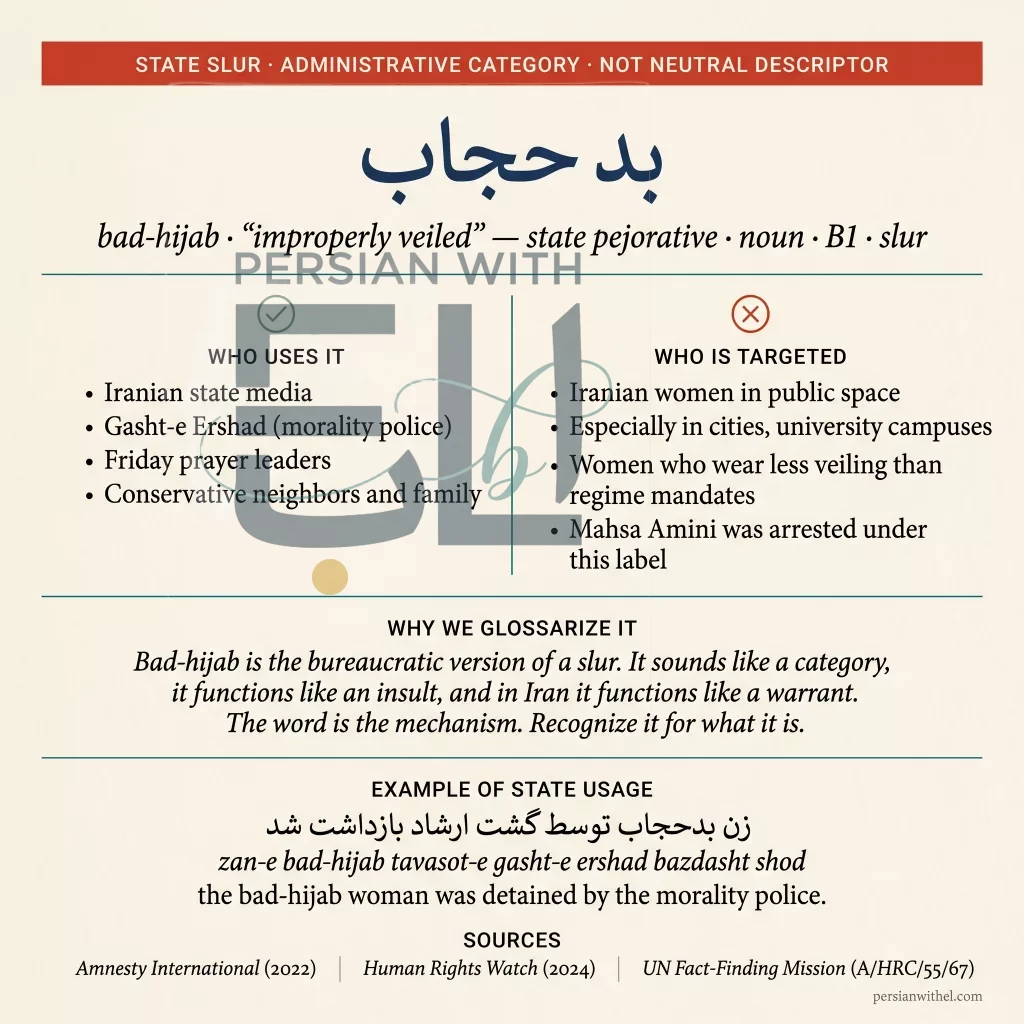
Bad-hijab (بد حجاب) is the Iranian state’s category for women whose veiling fails morality-police standards. Mahsa Amini was arrested under this label.
Fasegh (فاسق) is the Quranic word for an immoral transgressor, aimed today at women out of hijab, drinkers, anyone breaking a religious norm in public.