It’s January in Milan. The famous nebbia rolls in. thick, cinematic, the kind of fog that makes the Duomo look like it’s dissolving into a Fellini film. You throw on a trench coat, order an espresso, and feel vaguely European about the whole thing.
Then you FaceTime your friend in Tehran, and she’s wearing a surgical mask. Indoors. The mountains behind the city? Gone. Not hidden by romantic mist. buried under a toxic dome of exhaust and winter inversion that traps 10 million people in what locals call the “Grey City.”
Tehran’s air pollution crisis isn’t a weather event. It’s a lifestyle. And if you want to understand what daily life actually feels like in Iran’s capital between November and March, you need four words: آلودگی (āloodegi), تعطیل (ta’til), ترافیک (terāfik), and ماسک (māsk).
Checking the Air Like It’s a Crypto Portfolio
Milanese people check the weather to decide on an umbrella. Tehranis check the AQI (Air Quality Index) to decide if they should leave the house.
This isn’t hyperbole. When the number crosses 150. which happens regularly in winter. it means “dangerous for everyone,” not just asthma patients or grandparents. The app IQAir becomes more important than Instagram. People screenshot the number and send it to group chats like breaking news.
The word for all of this: آلودگی (āloodegi). literally “contamination” or “pollution.” But in winter Tehran, it functions more like a proper noun. Nobody says “the air quality is poor today.” They say “emrooz āloodegi kheyli bad-e” (امروز آلودگی خیلی بده). “the āloodegi is really bad today.” It’s the villain of every winter conversation.
When the āloodegi spikes, plans evaporate. Birthday dinners get cancelled. The guy who was going to propose at Darband postpones. Everyone seals their windows and watches the number like traders watching a crashing stock.
The School Closure Lottery
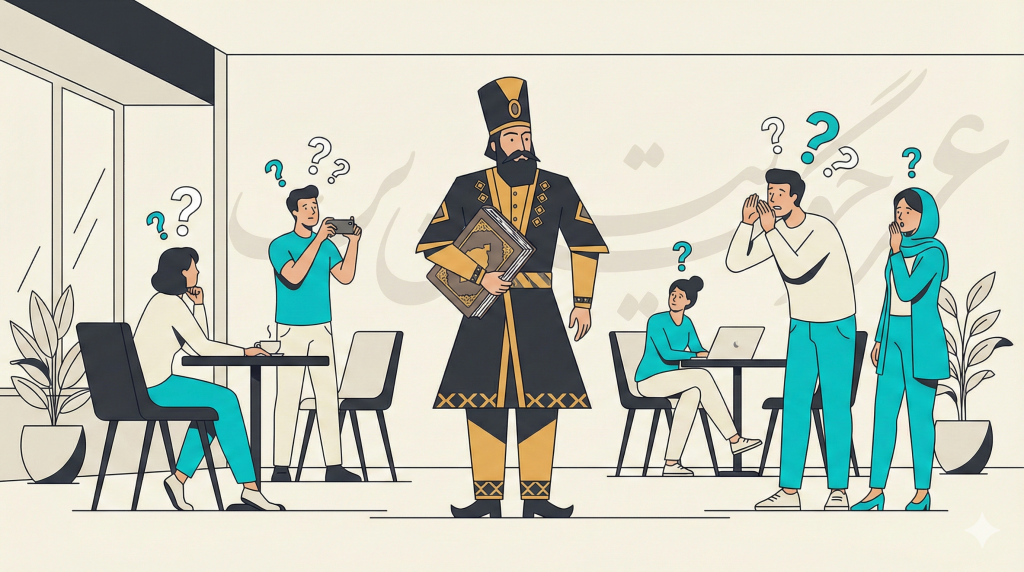
Now here’s where it gets interesting. When the AQI breaches the red zone, a specific kind of chaos takes over every family WhatsApp group in the city. Everyone’s waiting for one word: تعطیل (ta’til).
Ta’til means “closed” or “off.” A shop that’s closed is ta’til. A holiday is ta’til. But in pollution season, it refers specifically to emergency school and university closures. And the announcement process is pure theatre.
Picture this: It’s 9 PM. The AQI is at 158. Every student in Tehran is refreshing Telegram channels. The governor hasn’t said anything yet. The number creeps to 161. Still nothing. Parents are texting each other: “Did you hear anything?” Kids are already planning their day off. Then at 11 PM. sometimes later. the announcement drops. Or doesn’t.
When ta’til is declared, it’s technically a “stay inside” day. But for students? It’s a snow day without the snow. A victory delivered by smog. You’ll hear: “fardā madāres ta’til-e?” (فردا مدارس تعطیله؟). “Are schools closed tomorrow?”. repeated roughly 400 times per household during pollution season.
And if your brain isn’t working on a Monday morning, you can always say “maghzam ta’til-e”. “my brain is closed.” Universal Tehran humour.
Traffic: The Creature That Feeds the Monster
Tehran’s geography is part of the problem. the city sits in a bowl of mountains that traps stagnant air. But the real culprit is ترافیک (terāfik), and I don’t mean “traffic” the way London means traffic. I mean a living organism that consumes hours of your life.
Tehran’s traffic is legendary. The city has roughly 4 million registered vehicles for roads designed to handle maybe half that. During pollution peaks, the government enforces tarh-e zoj-o-fard. the even/odd licence plate scheme. If your plate ends in an even number on an odd day, your car stays home.
Does it help the air quality? Debatable. Does it make getting a Snapp (Iran’s Uber) impossible? Absolutely. The scheme creates its own chaos. people buy second cars with opposite plates, or they just pay the fines because parking violations are cheaper than a taxi.
Terāfik feeds the āloodegi, and the āloodegi leads to ta’til, which temporarily removes enough cars to briefly reduce the terāfik. It’s the circle of life, but grey and depressing.
The phrase you’ll hear constantly: “mondam too terāfik” (موندم تو ترافیک). “I’m stuck in traffic.” In Tehran, this is an accepted excuse for being up to two hours late to anything. Weddings, funerals, first dates. Nobody questions it.
Mask Culture: Tehran Was Ahead of the Curve
In 2020, the whole world discovered masks. Tehran looked up from its N95 and said, “Welcome to the party.”
The ماسک (māsk) has been part of Tehran’s winter uniform since the early 2000s. When I was in school, seeing people wearing them on the street wasn’t alarming. it was just December. You check your pockets before leaving: keys, wallet, phone, māsk.
The interesting thing is how masks became a fashion statement. Uptown girls in Tehran match their māsk to their scarf. Motorcycle couriers wear heavy-duty filters that make them look like Bane from Batman. It’s practical, it’s normalized, and when COVID hit, Tehran barely needed a public awareness campaign.
What the Grey City Actually Teaches You
Here’s what textbooks won’t give you: the way Tehranis talk about pollution reveals something deeper about Iranian resilience. They don’t protest (well, they do, but that’s a different kind of fight). Instead, they adapt with dark humour and creative problem-solving.
The guy who sells air purifiers out of his car boot near Vali-Asr Square. The grandmother who tapes plastic sheets over windows because her apartment doesn’t seal properly. The university students who time their outdoor activities around hourly AQI fluctuations like meteorological day traders.
If you’re learning Persian, these four words. āloodegi, ta’til, terāfik, māsk. aren’t just vocabulary. They’re a window into how 10 million people navigate a crisis that the government has been “working on” for three decades.
Your Pollution Season Cheat Sheet
- آلودگی (āloodegi). pollution. “Āloodegi emrooz az hadd gozashte.” (The pollution today is off the charts.)
- تعطیل (ta’til). closed/off. “Fardā hame chiz ta’til-e.” (Tomorrow everything’s closed.)
- ترافیک (terāfik). traffic. “Tā sā’at-e 9 too terāfik boodam.” (I was stuck in traffic until 9.)
- ماسک (māsk). mask. “Bedoon-e māsk beerun naro.” (Don’t go outside without a mask.)
- طرح زوج و فرد (tarh-e zoj-o-fard). even/odd plate scheme. The government’s Hail Mary against the smog.
The Grey City Keeps Moving
Every winter, Tehran goes grey. The mountains disappear. Schools close. Instagram fills with moody shots of empty highways and masked pedestrians. And every spring, the city exhales, the Alborz Mountains reappear, and everyone collectively pretends it won’t happen again next year.
But if you’re talking to an Iranian friend between November and March, you now have the vocabulary to understand the daily survival game. Drop an “āloodegi chetori-e emrooz?” and watch their eyes light up. because you just asked a question that actually matters to them.
Want to go deeper into how street Persian actually sounds versus what textbooks teach? Start with the basics of how spoken Farsi diverges from formal. it’ll make every conversation you have with an Iranian feel more real.
Ready to learn Persian that actually sounds like Tehran?
Book a lesson with me on Preply. I’ll teach you the words they don’t put in textbooks. Or start with free resources like the Chai and Conversation podcast.