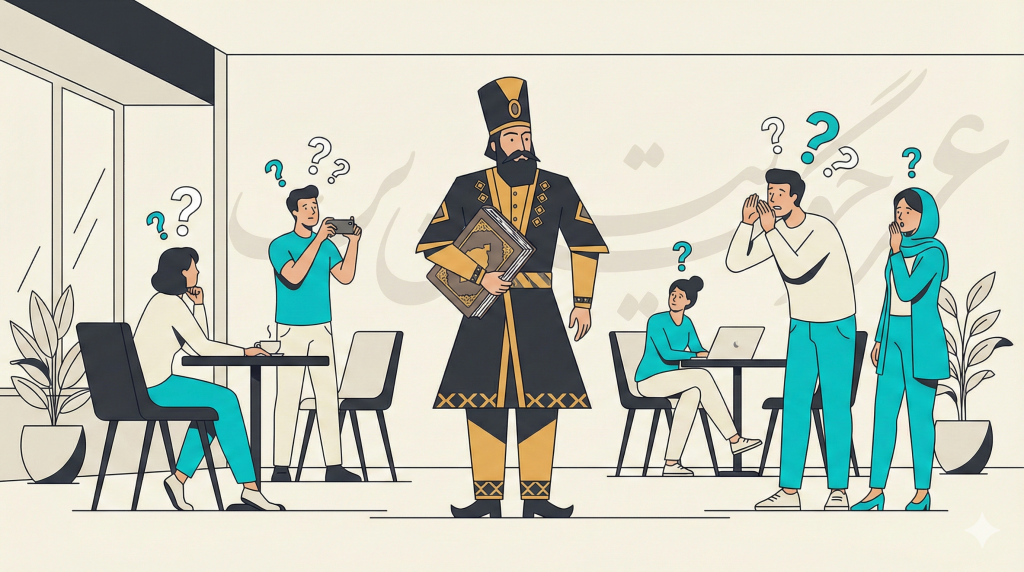
There are moments that reveal what a nation truly cares about. For Americans, it might be someone disrespecting the flag. For the British, cutting in line. For Iranians? Apparently, it’s throwing sandbags at cardboard cutouts of ancient Persian symbols on a reality TV show.
Welcome to the Bazmandeh scandal. the week Iran collectively lost its mind over a game show, and in doing so, taught us more about Iranian identity than any textbook ever could.
What Actually Happened at the Bazmandeh Show
The show is called Bazmandeh (بازمانده. bāzmānde), which translates to “Survivor.” It’s Iran’s version of the format you already know: dramatic music, cheap production, contestants doing absurd challenges for prize money. which, given that the Iranian Rial has the purchasing power of a damp napkin, makes the desperation very real.
In one episode, the producers designed a target practice challenge. Instead of generic bullseyes, they used cutouts featuring symbols of the Achaemenid Empire (شاهنشاهی هخامنشی. shāhanshāhi-ye hakhamaneshi). specifically the Homa (هما), the mythical bird-griffin you see carved into the walls of Persepolis Iran’s most sacred ancient site.
Contestants proceeded to hurl sandbags at the glory of ancient Persia. On national television. For points.
If you heard a collective scream from somewhere in the Middle East that day, now you know why.
The Word You Need to Know: توهین (Tohin)
To understand why Iran combusted, you need one word: توهین (tohin). meaning “insult” or “disrespect.” But tohin in Persian carries a weight that the English word “insult” simply doesn’t. It implies a deliberate violation of something sacred. It’s not “that was rude.” It’s “you have committed an act against our collective honor.”
Iranian Twitter. or what’s left of it behind the VPNs. erupted. The word tohin was everywhere. People were calling this بیاحترامی (bi-ehterāmi. “disrespect”), توهین به میراث ملی (tohin be mirās-e melli. “insult to national heritage”), and my personal favorite, straight-up خیانت (khiyānat. “betrayal/treason”).
Over sandbags. At cardboard cutouts. On a game show.
The reaction might seem disproportionate if you don’t understand what Persepolis Iran represents to the Iranian psyche. But if you’ve been learning Persian beyond the textbook, you already know: nothing in Iran is ever just about the surface-level thing.
Why Persepolis Iran Is Not Just Old Rocks
Persepolis. or تخت جمشید (takht-e jamshid, literally “Throne of Jamshid”). is not just a UNESCO World Heritage site. It’s not just ruins. For Iranians, it’s the physical proof that their civilization was running an empire while most of Europe was still figuring out agriculture.
The concept you need here is میراث فرهنگی (mirās-e farhangi). “cultural heritage.” But again, the Persian version hits different. Mirās (میراث) means “inheritance”. something passed down, something that belongs to you by birthright. When Iranians talk about Persepolis, they’re not discussing a tourist attraction. They’re talking about their هویت ملی (hoviyyat-e melli). their national identity.
This is a country where taxi drivers will lecture you about Cyrus the Great’s human rights charter from 539 BC. Where random people at parties will passionately explain that the word “paradise” comes from the Old Persian pairidaēza. Where national pride. غرور ملی (ghorur-e melli). is not a political position but an emotional baseline.
So when a reality show turns Achaemenid symbols into target practice, it’s not just bad taste. It’s an existential offense. Iranians reacted the way they react to everything that touches their sense of hoviyyat: with maximum volume and zero chill.
If you think this intensity is unique to heritage issues, wait until you discover how Iranians express love. Spoiler: they want to die for you. Literally. The language of affection is just as intense.
The Government Steps In (And the Irony Gets Thick)
Here’s where it gets beautiful.
SATRA (ساترا). Iran’s digital censorship body, the people who block your Instagram and filter your internet. swooped in like heritage defenders. They didn’t just wag a finger. They suspended the entire streaming platform and banned the show.
Their official language? The show committed tohin against نمادهای ملی و میهنی (namādhā-ye melli va mihani). “national and patriotic symbols.”
Let me make sure you appreciate the irony here.
This is the same government that:
- Has spent 45 years systematically downplaying pre-Islamic Persian history in school curricula
- Builds dams that threaten to flood ancient archaeological sites
- Lets humidity and neglect slowly eat away at priceless limestone carvings
- Has arrested people for gathering at the tomb of Cyrus the Great on Cyrus Day
And now they’re the defenders of the Homa? The champions of Achaemenid heritage?
The Persian word for this kind of move is ریاکاری (riyākāri). “hypocrisy.” And Iranians see right through it. In everyday street Farsi, people have far more colorful words for this kind of behavior. the kind your textbook definitely won’t teach you.
The Nationalist Pivot: Why the Regime Suddenly Loves Persepolis
The regime’s move isn’t random. It’s calculated. Call it the Nationalist Pivot.
The Islamic Republic’s ideological brand is bankrupt. The religious fervor that fueled 1979 has evaporated. Young Iranians. and Iran is a very young country. aren’t buying it. The government sees the polls. They see the streets. They see the protests.
So they’re doing what any desperate brand does: they’re rebranding. They’re trying to hijack the one thing that still unites a fractured, angry population. افتخار ملی (eftekhār-e melli). national pride. Heritage pride. The shared feeling that “we were great once, and that greatness belongs to us.”
They banned Bazmandeh not because they love history. They banned it because they’re terrified of a population looking for symbols to rally around that aren’t the regime’s own. Persepolis is dangerous to them precisely because it represents an Iran that existed long before the Islamic Republic. and will exist long after.
The show is now officially غیرمجاز (gheyr-e mojāz). “unauthorized.” A show about survival, banned by a government trying to do exactly that: survive.
If you want to understand the passive-aggressive, layered way Iranians communicate displeasure. whether about politics or about someone eating the last piece of tahdig. you’ll want to understand how Iranians say “no” without actually saying no. It’s an art form.
What This Teaches Us About Iranian Culture
The Bazmandeh scandal is a masterclass in Iranian cultural values. Here’s what it reveals:
1. Heritage is identity. When Iranians defend Persepolis, they’re defending themselves. The concept of mirās (inheritance) isn’t abstract. it’s personal. Disrespect the Homa, and you’ve disrespected every Iranian’s اجداد (ajdād). ancestors.
2. Outrage is a national sport. Iranians don’t do mild disapproval. They do full-throttle, poetic, historically-referenced fury. The diaspora in Los Angeles. تهرانجلس (Tehrānjeles). tweeted in ALL CAPS from Santa Monica. People who haven’t seen Iran since the 90s became overnight experts on ancient Mesopotamian iconography. It’s beautiful, honestly.
3. Nothing is ever just one thing. A game show scandal is simultaneously about heritage, government legitimacy, generational trauma, diaspora identity, and the eternal Iranian struggle between who they were, who they are, and who they want to be. If you’ve ever tried to learn Persian and wondered why calling someone a potato is a declaration of war, you already know: layers upon layers upon layers.
Your Vocabulary from This Mess
Here’s what you learned today, whether you wanted to or not:
| Persian | Transliteration | Meaning |
|---|---|---|
| تخت جمشید | takht-e jamshid | Persepolis (Throne of Jamshid) |
| میراث فرهنگی | mirās-e farhangi | Cultural heritage |
| هویت ملی | hoviyyat-e melli | National identity |
| غرور ملی | ghorur-e melli | National pride |
| توهین | tohin | Insult / disrespect (heavy) |
| بیاحترامی | bi-ehterāmi | Disrespect / discourtesy |
| خیانت | khiyānat | Betrayal / treason |
| ریاکاری | riyākāri | Hypocrisy |
| افتخار ملی | eftekhār-e melli | National pride / honor |
| غیرمجاز | gheyr-e mojāz | Unauthorized / banned |
| اجداد | ajdād | Ancestors |
| نمادهای ملی | namādhā-ye melli | National symbols |
Final Thoughts
The Bazmandeh incident is absurd. It’s a game show. It’s cardboard cutouts and sandbags. Nobody damaged actual ruins. No ancient artifact was harmed.
But that’s exactly the point. The reaction. from ordinary Iranians, from the diaspora, from the government. tells you everything about what Persepolis Iran means. It’s not archaeology. It’s identity. It’s the one thing that 80 million people, scattered across political lines and oceans and generations of trauma, can agree on: this is ours, and you don’t get to disrespect it.
And honestly? In a world where most people can’t agree on anything, there’s something kind of beautiful about a nation united in fury over the honor of a 2,500-year-old bird-griffin.
شب خوش (shab khosh). goodnight. I’m going to go think about what my cultural equivalent of the Homa would be and whether I’d throw sandbags at it for prize money. (The answer is no. The answer is always no.)
If this story resonated, you might also want to read about the arrest of Nobel laureate Narges Mohammadi. another moment where Iranian culture and politics collided in ways that only make sense if you understand the language.
Want to actually understand what Iranians are saying. not just the polite textbook version, but the real, layered, emotionally intense Persian that shows up in moments like this? I teach conversational Farsi that prepares you for real Iran, not a phrasebook Iran.
Book a lesson with me on Preply and let’s get you speaking like someone who actually gets the culture.
Want to start learning Farsi from scratch? Here’s our honest guide to learning Farsi online.