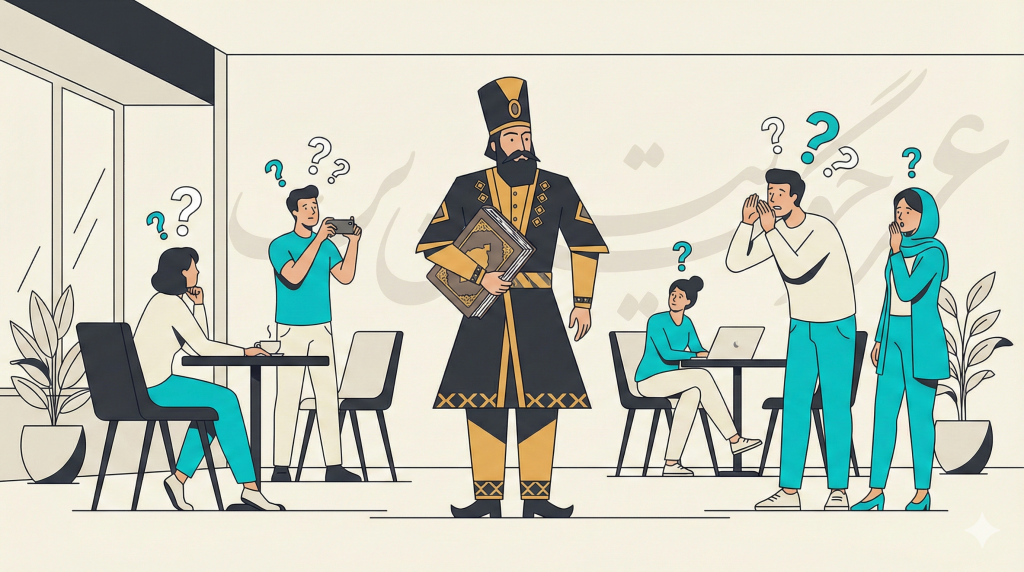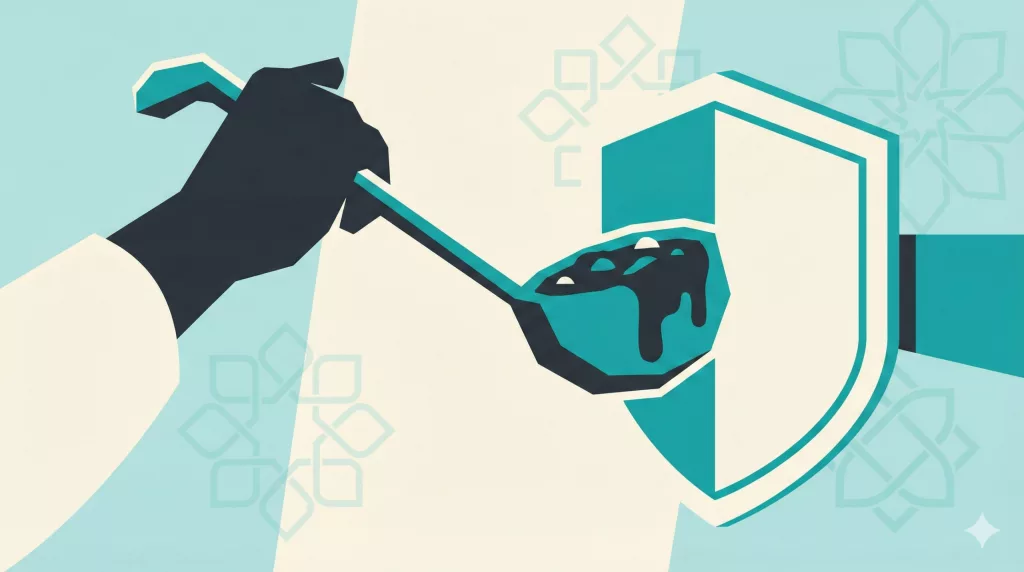
The first time someone said “jigar-to bokhoram” to me in Persian, I froze. Literal translation: “I want to eat your liver.” I had been speaking Persian for about a year. I was fairly confident this was a threat.
It was not a threat. It was the warmest thing anyone had said to me all week.
Persian profanity and Persian affection operate on the same anatomical vocabulary, and if you don’t know which is which, you will misread situations badly. This post is the guide I wish I’d had. It covers the actual structure of Persian insults, the words that sound offensive but aren’t, and the ones that sound mild but aren’t. No sanitised glossary. No shock-jock list. Just the real thing with context.
The Liver Paradox: Affectionate Anatomy
Persian uses the liver. جگر (jigar). as a term of endearment. “Jigar-to bokhoram” (جیگرتو بخورم) literally means “let me eat your liver” but functions as “you’re so adorable I could eat you up.” It’s warm. It’s intimate. It makes no anatomical sense and Iranians have used it for centuries.
The liver occupies the emotional space that English gives to the heart. “Jigar-am” (جیگرم). “my liver”. is a term of endearment roughly equivalent to “my darling.” “Jigar-tala” (جیگر طلا). “golden liver”. is reserved for people you really like. None of this involves threats. All of it involves profound affection.
Understanding this distinction matters before anything else: some of the most alarming-sounding phrases in Persian are the most loving ones.
The Family-Honour Axis: Where the Real Insults Live
Iranian insult culture is built on honour and family (for deeper context, see Iranian social customs in Encyclopaedia Iranica). The most severe insults don’t attack the individual. they attack what the individual is supposed to protect: their family’s name, their parents, their lineage.
Pedar-sookhteh (پدرسوخته). literally “burnt father.” This is a classic, broadly used insult that lands somewhere between “bastard” and “you miserable thing.” It’s not the nuclear option. It’s the everyday option. Iranians use it affectionately between friends and furiously at strangers who cut them off in traffic. Context is everything. You can hear pronunciation on Forvo to get the tone right.
The “pedar-” construction (پدر + X = father + verb) extends into several variations. You’ll hear them. The formula is productive: insult + family member = escalating offense depending on which family member you choose.
Bī-sharaf (بیشرف). without honour/shame. This is serious. Accusing someone of having no sharaf. no sense of honour, no moral backbone. is not casual. It implies a fundamental character flaw, not a momentary failing. Use it to understand, not to say casually.
Harāmzādeh (حرامزاده). “born of the forbidden.” Functionally equivalent to “bastard” in the English sense. Old vocabulary, still used, still understood as a genuine insult.
The Animal Tier
A significant category of Persian insults involves livestock. The main ones:
Khar (خر, donkey). the universal mild insult. “Khar shodī” (خر شدی, you became a donkey) means “you’ve become an idiot.” “Khar” alone can mean someone is being stubborn, stupid, or both. It’s the Persian equivalent of “you idiot”. frequent, relatively mild, occasionally affectionate between friends.
Gāv (گاو, cow). used for someone slow-witted or clumsy. Slightly more pointed than khar. “Gāv” on its own as an insult: calling someone a cow in the sense of dim or lumbering.
Khar-gir (خرگیر). literally “donkey-catcher”. used for someone who does unrewarding, pointless work. Less common but useful for understanding the animal-metaphor system.
The Honour-Shame Matrix
To understand why certain words hit harder than others, you need the underlying value structure. Persian insults draw on two axes: honour (sharaf, شرف) and shame/face (āberoo, آبرو).
Losing āberoo. your face, your social standing. is serious. “Āberoo-riz” (آبروریز) describes something that causes a loss of face. Telling someone “āberoot raft” (آبروت رفت, your reputation is gone) is not a small accusation. It’s saying their standing in the community is damaged.
This is why attacks on family members escalate so quickly in Persian conflicts. The insult isn’t just about the individual. it’s about what that individual represents in a family-honour structure that Iranians, however secular or modern, are still embedded in culturally.
The Political Vocabulary
Post-1979, a layer of political vocabulary layered onto everyday profanity. Marg bar (مرگ بر, death to) became the protest chant construction. “marg bar dictātor,” “marg bar gholamān.” It’s heavy vocabulary. You’ll encounter it in Iranian news coverage and political contexts. You don’t drop it casually.
The street vocabulary around the regime. the mockery, the nicknames, the sardonic abbreviations used on Telegram channels. is a whole register unto itself. It changes fast, it’s often wordplay-dependent, and it carries weight that an outsider using it without understanding the history can misread badly.
What You Should Actually Say (And What to Avoid)
For learners: understanding Persian profanity is important for comprehension. Actually deploying it is more fraught. A few guidelines:
“Khar” and “pedar-sookhteh” at mild levels. Iranians use these between friends all the time. If you’re in a context where it’s clearly joking between equals, you’ll be understood. If you miscalibrate the context, you’ll cause genuine offense.
The family-honour insults. avoid using as a learner. They carry weight that’s easy to underestimate. You’ll understand them when someone else uses them. You don’t need to deploy them.
The affectionate anatomical language. know these well. “Jigar-am,” “jigar-to bokhoram,” the whole liver register. these will come at you in warm interactions and you should know they’re warm, not alarming.
If you want to learn Persian beyond the colorful stuff, ZabanYar teaches the language properly from day one. free, with flashcards and AI practice.
If you want to understand how Persian slang and spoken Persian actually work. including what’s appropriate when. working with a tutor who grew up in this system is the most direct way. I offer one-on-one lessons here. We won’t start with a list of swear words. But we also won’t pretend they don’t exist. If you want to explore meanings further, try look up words in Vajehyab dictionary.
For a broader look at informal Persian (including the words that won’t get you uninvited from dinner), see the Persian Slang Guide.