In Mashhad this week, a small group of lawyers, activists, and relatives gathered quietly to mourn two murdered attorneys, the kind of memorial that in Europe brings candles and supermarket flowers, not riot police. It was a textbook etesām / tajammo’-e mosālemat‑amiz (اعتصام / تجمع مسالمتآمیز), a peaceful assembly built around grief, not slogans. The message was simple: you killed our lawyers; at least let us say their names aloud.
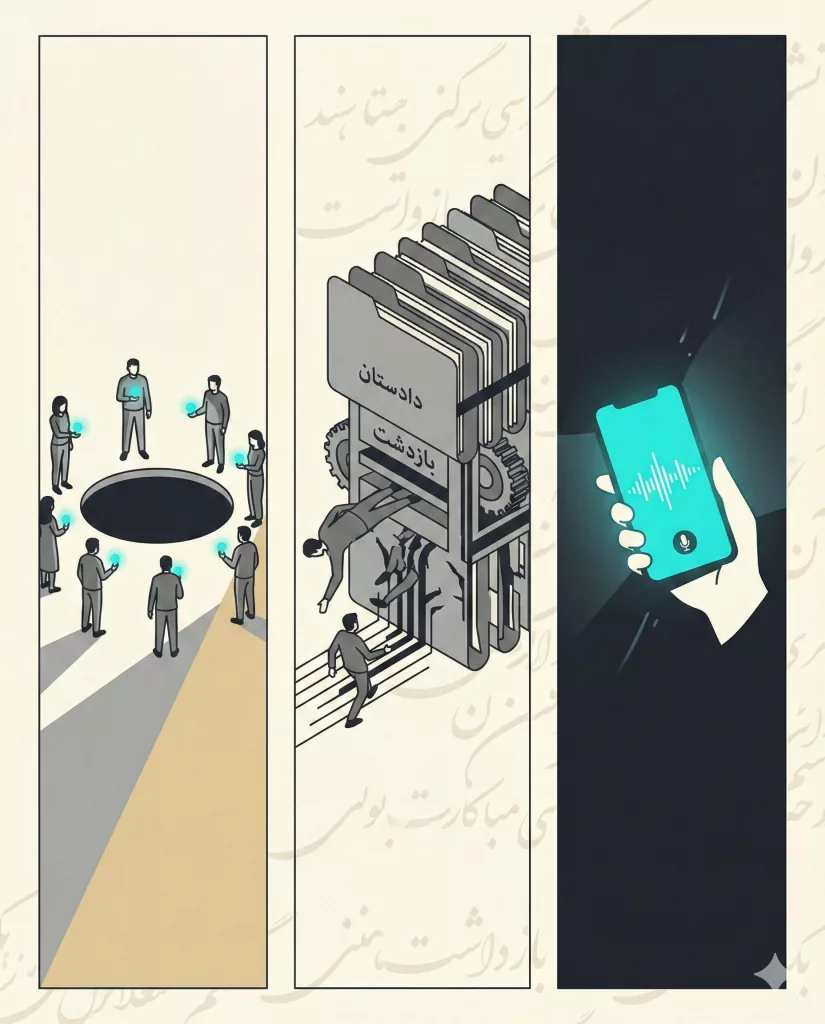
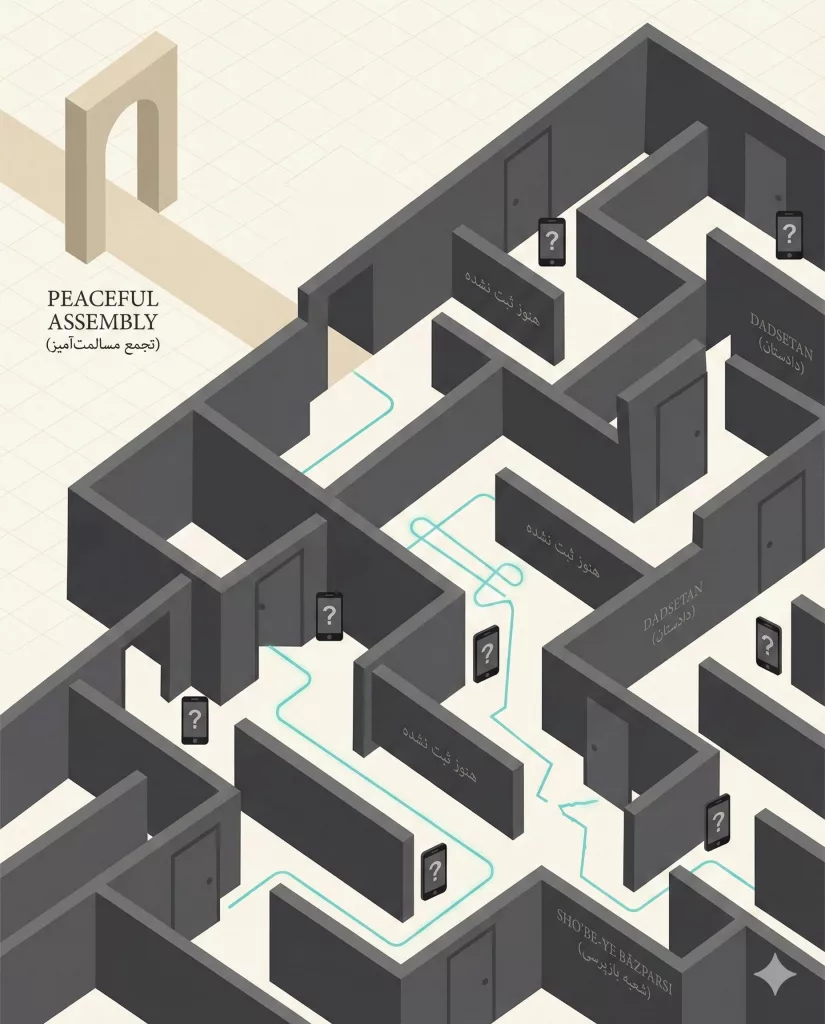
Instead, what they got was bazdasht (بازداشت), that “neutral” legal word the system loves because it sounds clean, procedural, almost boring. Bazdasht on paper, but in practice it means being shoved into vans, phones grabbed, no warrant shown, no information given. Families now begin that familiar Iranian ritual: calling every prison, every branch, every friend‑of‑a‑friend who “might know someone in the system,” and always hearing “hanuz sabt nashode” (“it’s not registered yet”) as if their loved ones were delayed packages, not human beings.
How Bazdasht Really Works
In theory, bazdasht means “temporary deprivation of liberty until investigation finishes.” In reality, especially for vokalā‑ye mozāhem (وکلای مزاحم), or “annoying lawyers” who insist on rights, it has become a pressure tactic. People disappear for days, families are left in limbo, silenced by fear. When outrage grows too loud, the detainee might be released quietly; when it doesn’t, a file begins to build.
That is when the dadsetān / sho’be‑ye bāzparsi (دادستان / شعبه بازپرسی) steps in, all formality and no transparency. In state media, it appears as “Branch X of the Public and Revolutionary Prosecutor’s Office,” but in Persian you hear “parvande be sho’be‑ye bāzparsi arz shod,” meaning the case was submitted to the investigative branch. It sounds neutral, almost civil, but in practice it is the space where accusations like tajammo’ va te’āmod alayh‑e nezam or tabliqh alayh‑e nezam get stamped onto those whose only act was standing at a grave.
The Court That Pretends It Is Not Political
What makes the Mashhad lawyers detention so bitter is the pretense of legality. The dadsetān (prosecutor) poses as a guardian of public order, yet “public order” here means no gathering, no mourning, and never a lawyer who reminds anyone that due process once existed.
The sho’be‑ye bāzparsi becomes a machine that turns dignity into paperwork. You go from “offered fateheh at a memorial” to “suspected of collusion and propaganda” in two lines of legalese. The horror is in what the documents omit: no mention of raids or beatings, no reference to detainees cut off from lawyers completely.
Where Civil Society Still Breathes
The only reason stories like the recent Mashhad lawyers detention do not disappear is jāme’e‑ye madani (جامعه مدنی – civil society), that half‑strangled force that refuses to die. Here, it means Iranian lawyers issuing statements, human rights groups translating witness accounts abroad, families posting grainy videos at two a.m., hoping the algorithm notices. It is not Brussels NGOs or policy panels; it is a mother livestreaming from Mashhad, saying she does not know where her son is.
For policy people in Washington or London used to polished “civil society partners,” this is the unfiltered version: parents who turn murdered children into cases, siblings who track every date, lawyers who know they could go from courtroom to cell any day. It is fragile, improvised, and still the only pressure keeping the dadsetān from acting with total impunity.
Milan, from the Waiting Room
Reading this from Milan feels like bitter irony. Here, when a lawyer is killed, the ordini professionali issue formal statements, black ribbons appear on LinkedIn, and maybe a mild strike follows. In Iran, if you attend a memorial for a murdered lawyer, your family starts checking detention center lists before you arrive home. Waiting rooms here smell of burnt espresso and bureaucracy; there, they smell of fear and bazdasht.
And yet, both systems hide behind procedure. Here the excuse is “the file has not moved to the right ufficio yet.” There it is “parvande hanuz dast‑e sho’be‑ye bāzparsi ast,” meaning the case is still with the investigative branch. The difference is what delay costs. In Milan, it means another month. In Iran, it may mean another name added to that growing list of memorials no one can safely attend.