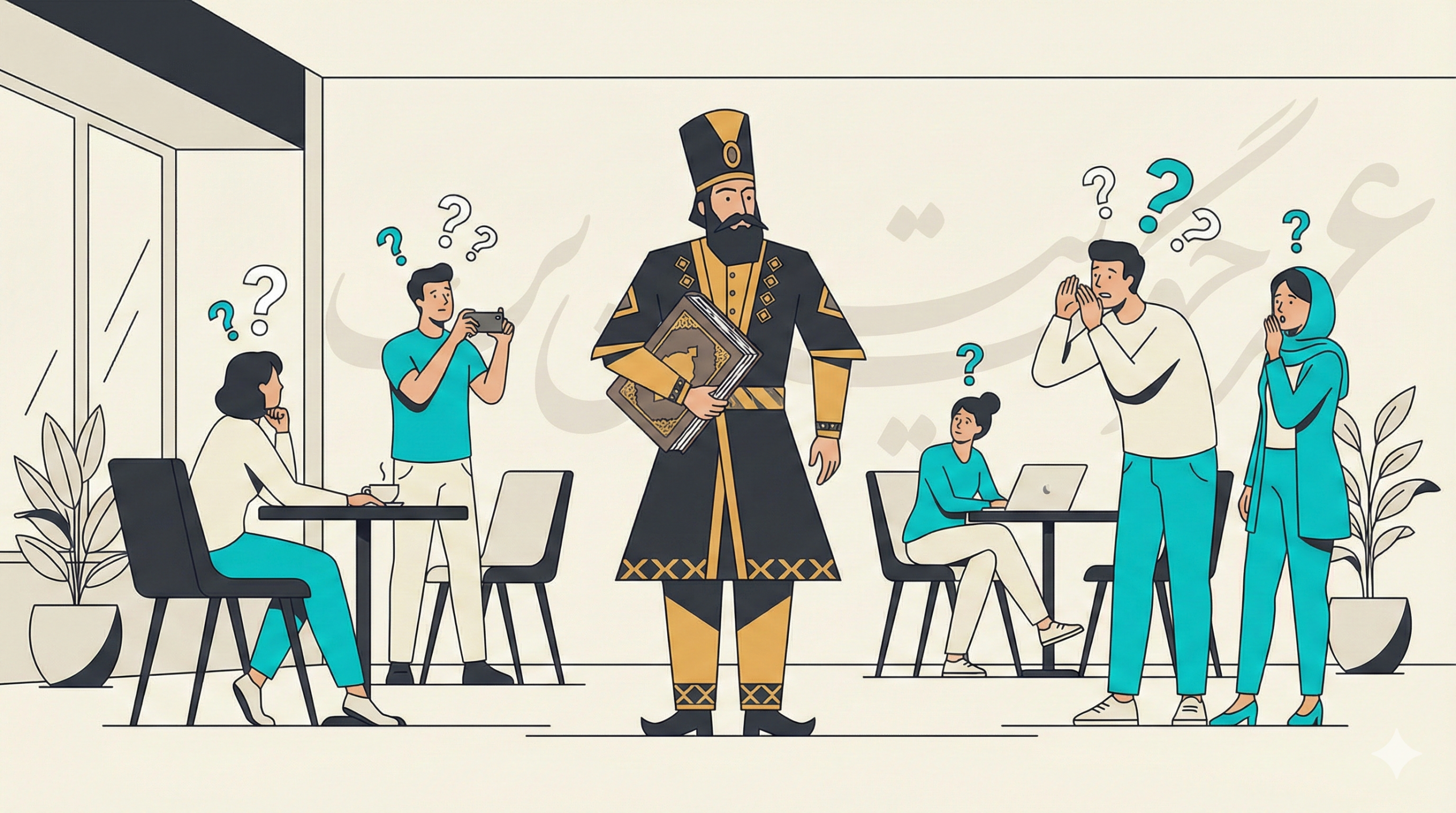
You’ve probably been there: You download a mainstream language app, type in “Persian,” and get… nothing. Or worse, you find a course that sounds like it was recorded by a grumpy news anchor in 1975. If you’ve been hunting for Farsi resources, you’ve almost certainly stumbled across Chai and Conversation. It’s the darling of the Persian learning world, often touted as the antidote to dry, textbook learning.
But is it actually enough to get you speaking? As a native Persian tutor who spends his days de-programming students from bad app habits, I’m usually skeptical. Most tools teach you how to pass a quiz, not how to survive a dinner party in Tehran. Chai and Conversation promises something different: conversational Farsi. Today, we’re going to see if it actually delivers on that promise or if it’s just another passive listening trap disguised as a solution.
Key Takeaways
Chai and Conversation stands out by teaching colloquial “Spoken Farsi” rather than the formal textbook language found in most generic apps.
The platform effectively integrates essential cultural nuances, such as the complicated social etiquette of *Ta’arof*, into its lessons.
While excellent for comprehension, the passive audio format often fails to prepare learners for the pressure of real-time conversation.
The course is an ideal starting point for absolute beginners and heritage learners but tops out around the intermediate proficiency level.
You should supplement Chai and Conversation with a human tutor to bridge the critical gap between listening to Farsi and actually speaking it.
Is Chai and Conversation Good for Learning Persian?
Short answer: Yes, it is significantly better than 90% of what is out there. But that is a low bar.
If your goal is to understand the difference between written and spoken Farsi without crying, this platform is a goldmine. Leyla Shams, the creator, understands the pain points of the English speaker. But, if you think listening to a podcast on your commute will make you fluent enough to handle a heated debate about who pays the bill (Ta’arof), you are in for a rude awakening. It is a fantastic resource, but it is not a magic pill.
What is Chai and Conversation?
Chai and Conversation started as a podcast back in 2010, ancient history in internet years, and has grown into a full-blown membership site. Unlike the soulless, algorithm-driven content of Mondly or Rosetta Stone, this is a passion project led by Leyla Shams.
It’s built around audio lessons that break down conversational Persian for English speakers. It’s not a gamified dopamine trap: it’s essentially a guided audio tour of the language. They offer a “Speak Persian” course, a “Read and Write” module, and even bootcamps. The vibe is very much “learning with a friend over tea,” which is charming, but we need to see if that charm translates to competence.
Does Chai and Conversation Have a Farsi Course?
Yes. In fact, Farsi is all they do. This is a crucial distinction.
Most apps are “content farms”, they take a database of English words, use Google Translate to turn them into 50 languages, and sell it to you. Chai and Conversation is bespoke. Every lesson is designed specifically for the unique headaches of the Persian language. There is no “Spanish course reskinned as Persian” here.
What Chai and Conversation Gets Right About Farsi
I have to give credit where it’s due: Leyla actually teaches Spoken Farsi (Farsi-ye Mohavere).
This is rare. Most resources teach you the formal, “book” language that nobody uses in daily life. If you use Pimsleur or a university textbook, you learn to say:
آیا شما میخواهید به بازار بروید؟ (Ayā shomā mikhāhid be bāzār beravid?)
If you say that to a taxi driver in Tehran, he will think you are a time traveler from the 18th century. Chai and Conversation teaches you the real version:
میخوای بری بازار؟ (Mikhāy beri bāzār?)
They also integrate culture directly into the language. They don’t just teach you the word for “dinner”: they explain the social expectations of being a guest. That context is usually missing from apps, and it’s the difference between speaking Farsi and actually communicating.
The Problem: Why Chai and Conversation Fails for Persian
So, if it teaches spoken Farsi and cultural context, what’s the problem?
The problem is the medium itself. It is passive.
The Illusion of Competence
You listen to Leyla explain a concept in English. It makes perfect sense. You nod along. You feel smart. You learn the phrase [translate:قربانت بروم] (Ghorbānat beravam – literal: “May I be sacrificed for you”).
Then, you meet an Iranian. They say something fast, mumbled, and unexpected. You freeze. Why? Because you spent 50 hours listening to someone explain Farsi in English, and 0 hours struggling to produce Farsi under pressure.
The “English Sandwich” Issue
Especially in the earlier units, there is a lot of English. It’s comfortable. It’s safe. But real immersion requires you to drown a little bit. When the training wheels stay on for too long, you never learn to balance. You become an expert at understanding explanations about Farsi, rather than using Farsi.
The Diglossia Trap: Written vs. Spoken Farsi
Here is the beast that kills most learners: Diglossia. In Persian, we write one way and speak another. The vowel sounds change, the verb endings change, and entire words get swallowed.
Chai and Conversation is one of the few that acknowledges this. But acknowledging it and mastering it are two different things.
Spoken/Real: [translate:نیستش] (Nistesh), (Note: nist is standard, but in street talk we often add the clitic sh or change the sentence structure entirely depending on context).
While the podcast introduces these spoken forms, it often lacks the drilling intensity needed to make the spoken form your default. You might intellectually know the difference, but without a tutor correcting you every time you slip back into “book mode,” you’ll default to whatever is easiest to read.
What Chai and Conversation Cannot Teach You
There are aspects of Persian that simply cannot be encoded into an audio file.
1. The Art of Ta’arof (Politeness Judo)
They explain Ta’arof (Persian ritual politeness), sure. But Ta’arof is dynamic. It changes based on who you are talking to (age, status, gender).
If you offer to pay the bill and your friend says [translate:خواهش میکنم] (Khāhesh mikonam – “I beg you, please”), are they serious? Or are they waiting for you to insist one more time? An audio file can’t read the room. It can’t see the body language. You need a human to tell you, “Okay, stop offering now, you’re making it weird.”
2. Register Shifting
You learn the casual way and the formal way. But do you know how to mix them? You might use a slang word like [translate:دمت گرم] (Damet garm – “May your breath be warm” / Thanks) with your boss, thinking you’re being friendly, and accidentally sound disrespectful. Real fluency is knowing exactly where the line is.
Real User Experiences with Chai and Conversation for Farsi
I scour the forums so you don’t have to. The general consensus on Reddit and language boards aligns with my analysis: great for starting, bad for finishing.
One user on r/farsi noted:
“I learned to read and write with their bootcamp, and my in-laws were impressed I knew basic phrases. But when the dinner conversation actually started speed-talking, I was lost.”
Another review highlights the structure:
“Leyla is amazing to listen to. It feels like a podcast. But I realized after 3 units that I couldn’t actually form my own sentences, I could only repeat hers.”
Chai and Conversation vs. Human Tutoring for Persian
Let’s look at the breakdown. Where does the podcast end and the need for a human begin?
Aspect
Chai and Conversation
Human Tutor (El)
Spoken Farsi
✅ Teaches colloquial forms
✅ Teaches colloquial + slang
Interaction
❌ Passive listening
✅ Active conversation
Feedback
❌ None (unless you self-correct)
✅ Immediate correction
Ta’arof
🟡 Explains the concept
✅ Roleplays the scenario
Customization
❌ One size fits all
✅ Tailored to your goals
Cost
💰 ~$20-30/month
💰 Per lesson (Higher)
The Verdict: Should You Use Chai and Conversation for Farsi?
👤 ELYAR’S TAKE:
“Chai and Conversation is the best ‘app’ resource out there for Persian, hands down. It respects the language and the culture. But don’t fool yourself, it’s a textbook in audio format. It will give you the ingredients, but it won’t teach you how to cook under pressure. Use it for your commute, but don’t expect it to make you fluent.”
🎯 WHO THIS IS GOOD FOR:
Heritage Learners: If you heard Farsi growing up but can’t speak, this will unlock those dormant memories. ✓
Commuters: Perfect for passive absorption while driving. ✓
Absolute Beginners: A gentle, non-scary introduction to the language. ✓
WHO THIS IS NOT GOOD FOR:
Serious Speakers: If you need to speak now, you need practice, not podcasts. ✗
Advanced Learners: The content tops out around intermediate. ✗
The Hybrid Approach to Persian Learning
If Chai and Conversation didn’t make you fluent, it’s not your fault. You were trying to learn a skill (speaking) by doing a different activity (listening).
The best way to use Chai and Conversation is as input. Listen to the lessons to get the vocabulary and the grammar concepts. Then, you need a safe space to activate that knowledge, to mess up, to mispronounce things, and to get corrected by someone who knows the street code of Tehran.
Real conversational Farsi isn’t harder than what the apps teach: it’s just different. It requires understanding the nuance, the humor, and the Ta’arof. That’s where I come in. I take what you’ve heard in the podcasts and turn it into active, usable language.
Ready to stop listening and start speaking? [Book a lesson with me] and let’s turn that passive knowledge into active power.
Frequently Asked Questions
Is Chai and Conversation enough to become fluent in Farsi?
Not entirely. While Chai and Conversation is an excellent resource for learning vocabulary and listening comprehension, it is primarily a passive tool. To achieve true fluency, you need active speaking practice with a native tutor to master real-time conversation and complex cultural nuances like Ta’arof.
Does Chai and Conversation teach formal or spoken Persian?
The platform focuses specifically on Spoken Farsi (Farsi-ye Mohavere). Unlike textbooks or apps like Pimsleur that teach formal “book” language, Chai and Conversation teaches the colloquial shortenings and phrases actually used in daily life in Iran, such as saying “mikhāy” instead of the formal “mikhāhid.”
Is Chai and Conversation free to use?
Chai and Conversation began as a free podcast, which is still available, but the comprehensive learning platform is a paid service. To access lesson guides, the “Read and Write” module, and structured bootcamps, you typically need a paid monthly membership, approximately $20–30 per month.
How does Chai and Conversation compare to apps like Rosetta Stone?
Chai and Conversation is significantly more effective for Farsi than “content farm” apps like Rosetta Stone or Mondly. While big apps use generic templates translated into multiple languages, Chai and Conversation is bespoke, designed specifically to address unique Persian challenges like diglossia (the difference between written and spoken forms).
Who is the Chai and Conversation course best suited for?
This course is ideal for absolute beginners, commuters looking for audio-based learning, and “heritage learners”people who heard Farsi growing up but cannot speak it. However, it is not recommended for advanced learners or those who need immediate correction on their pronunciation.